Booking a Visit
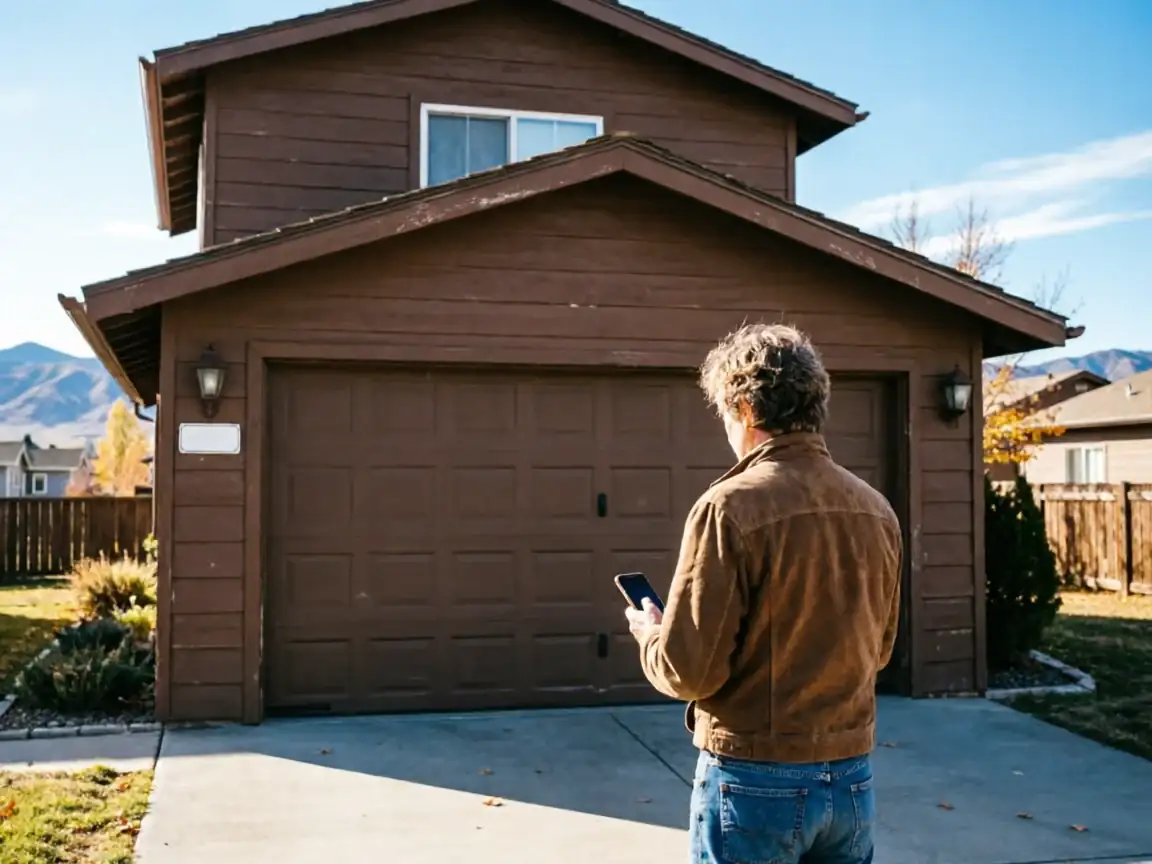
Most of the emergency calls we get from Columbine are the same fault: a torsion spring that let go overnight, or a cable that jumped the drum and left the door hanging crooked on one side. Call us and tell us which one you're looking at - a door that won't move at all, or one that's stuck halfway - and we'll know roughly what's on the truck before we leave Highlands Ranch.
We're coming from Highlands Ranch, about 6 miles out, so there's drive time built into every visit. We don't keep a branch in Columbine and we won't pretend otherwise. What we can tell you is that houses here were mostly built in the 1970s, and that era's hardware is specific enough that knowing it ahead of time means we show up with the right spring size and the right bracket, not a guess.
What the Fix Involves
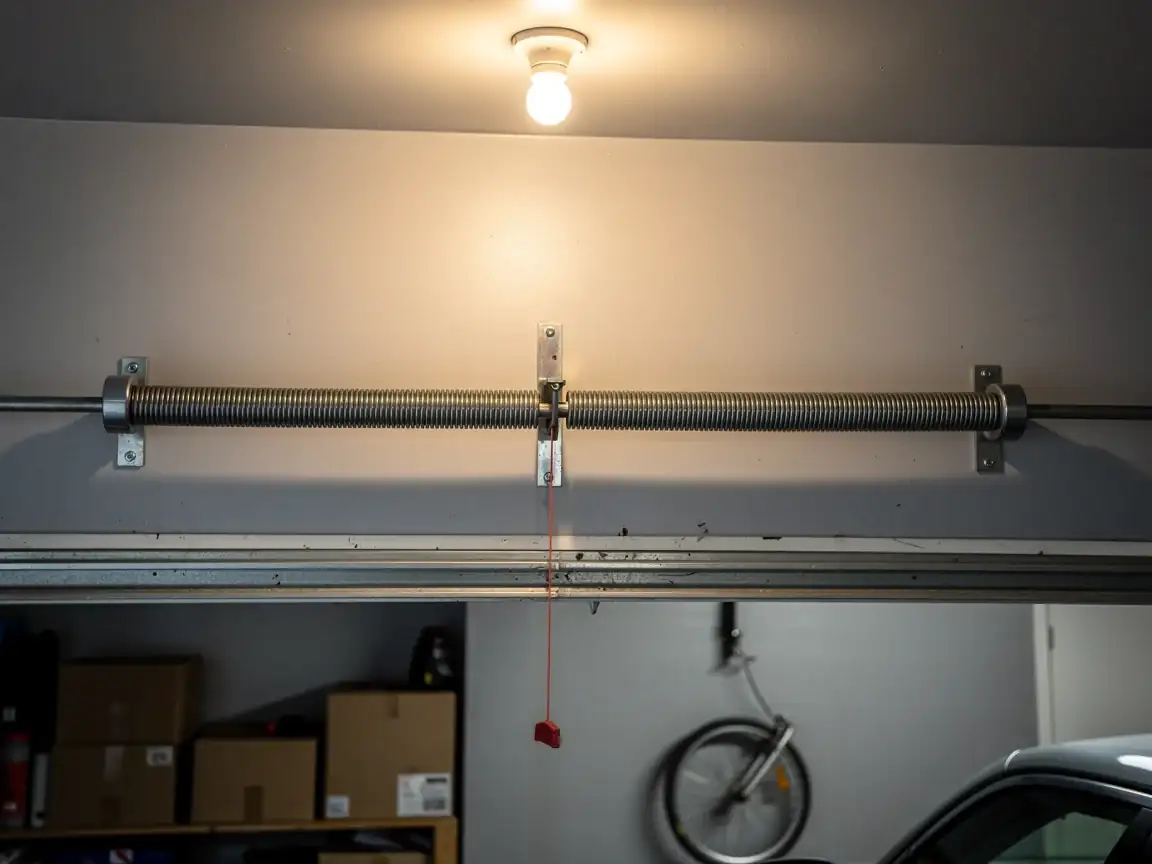
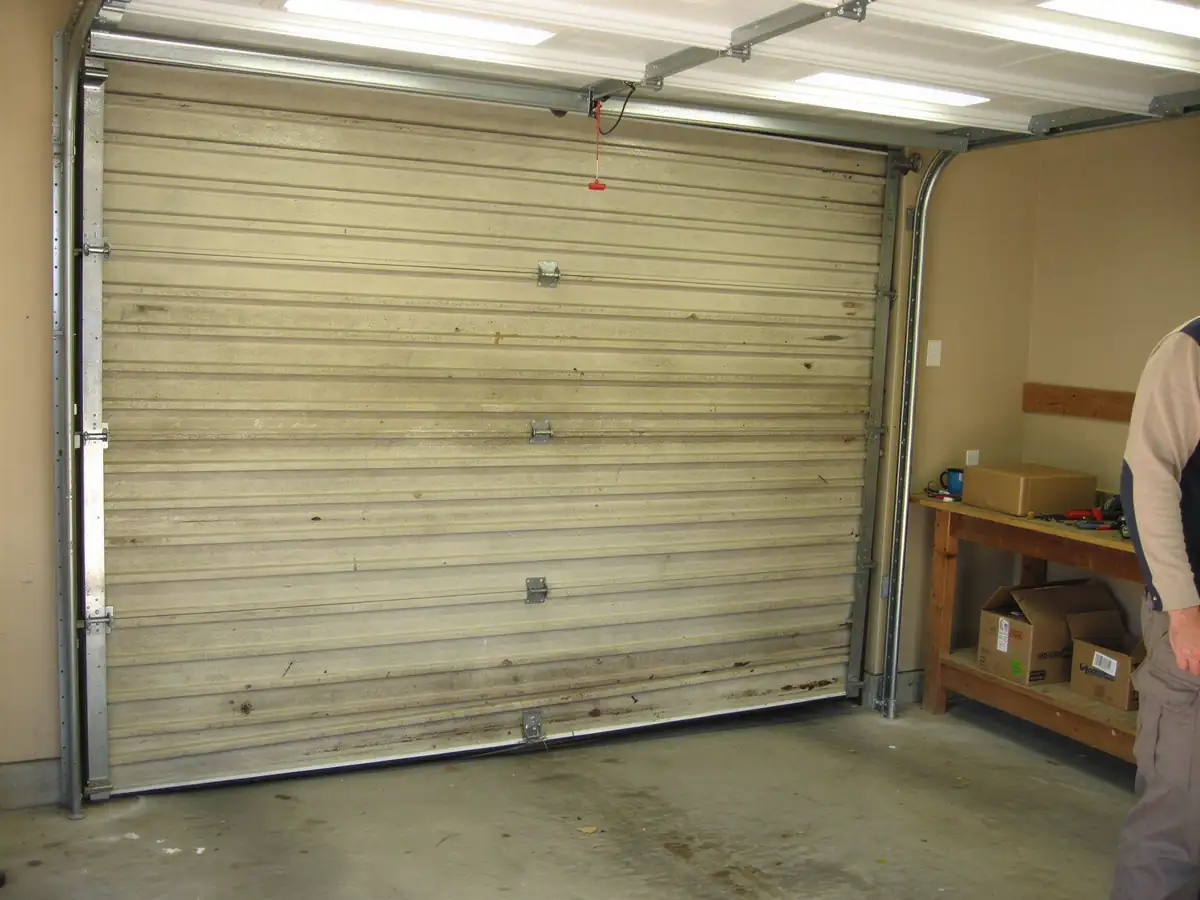
Columbine's housing stock sits inside the broader 1938-2005 build window for this service area, but the local median here lands around 1976 - squarely in the decade when torsion springs were wound to lighter door weights and openers ran on chain drive with steel rail, not the belt-and-rail setups going into new builds now. When a spring on one of these doors fails, it usually takes the cable with it, because the original cable drums on '70s hardware wear thin after forty-some years of cycling.
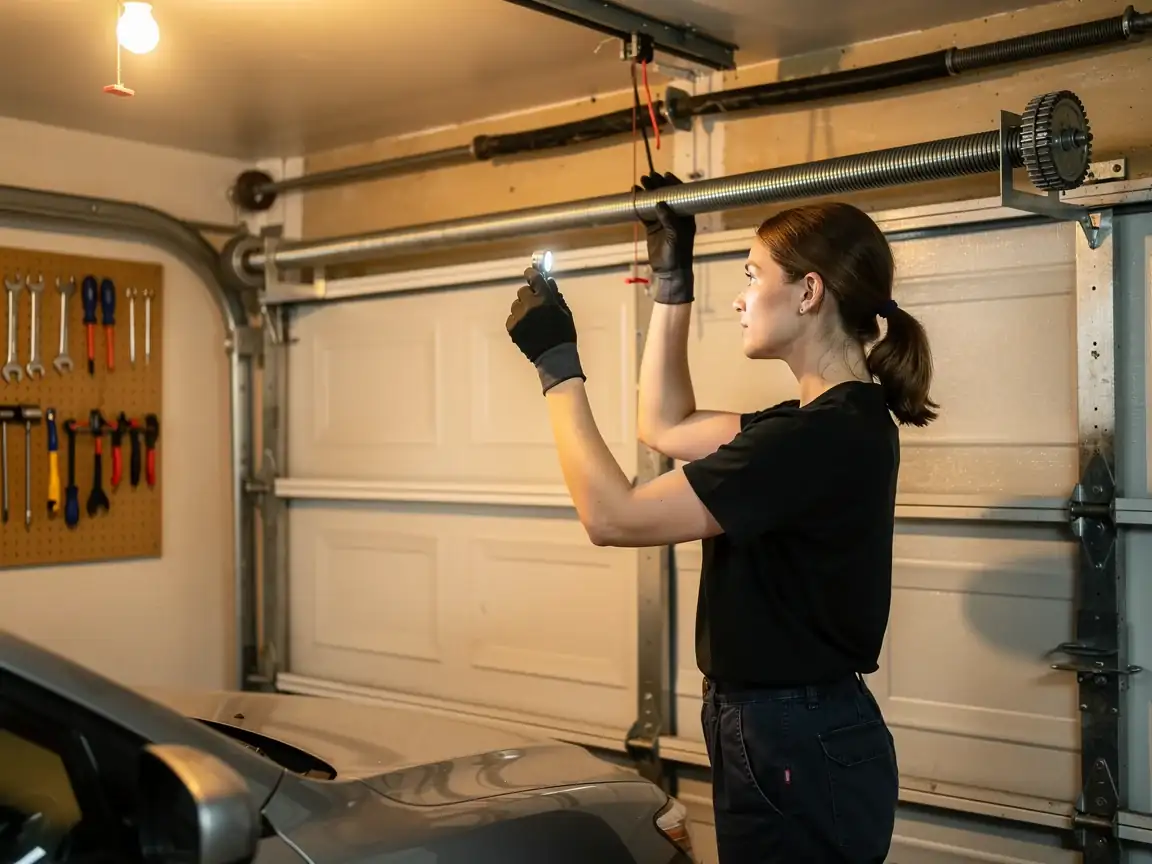
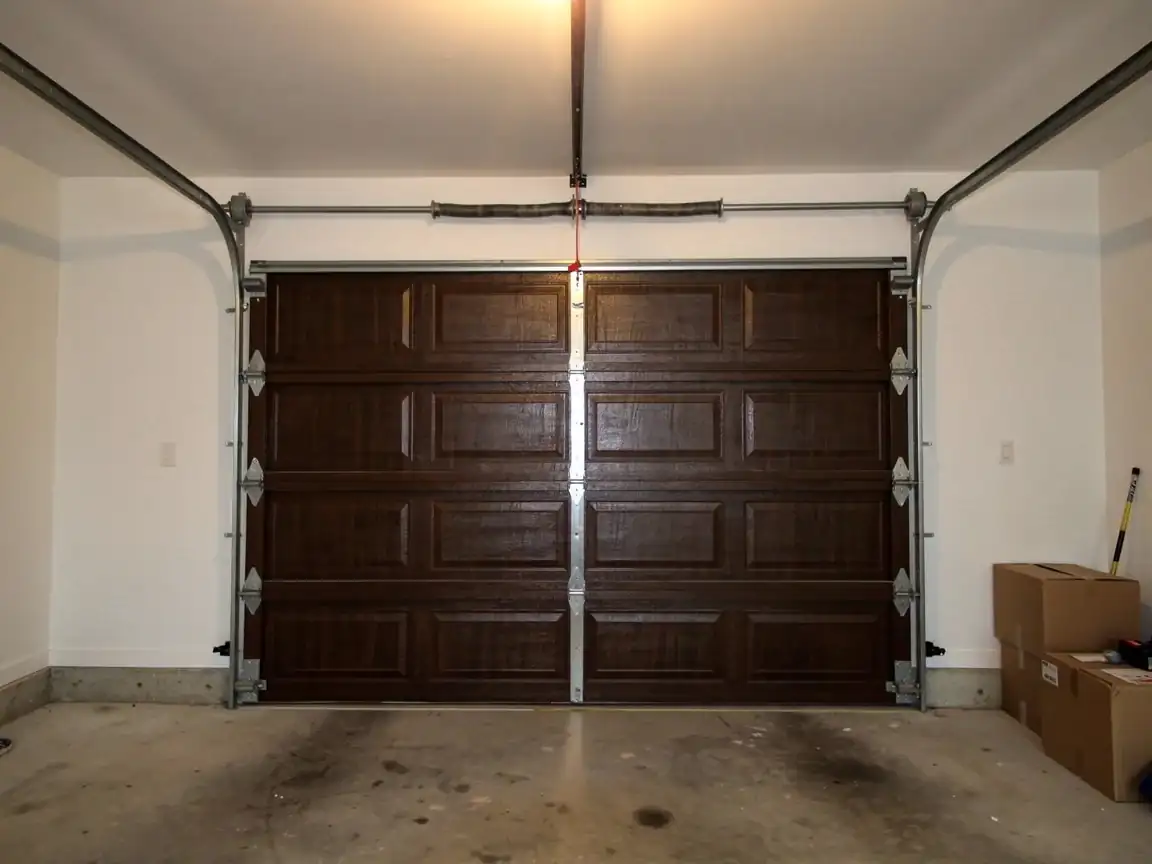
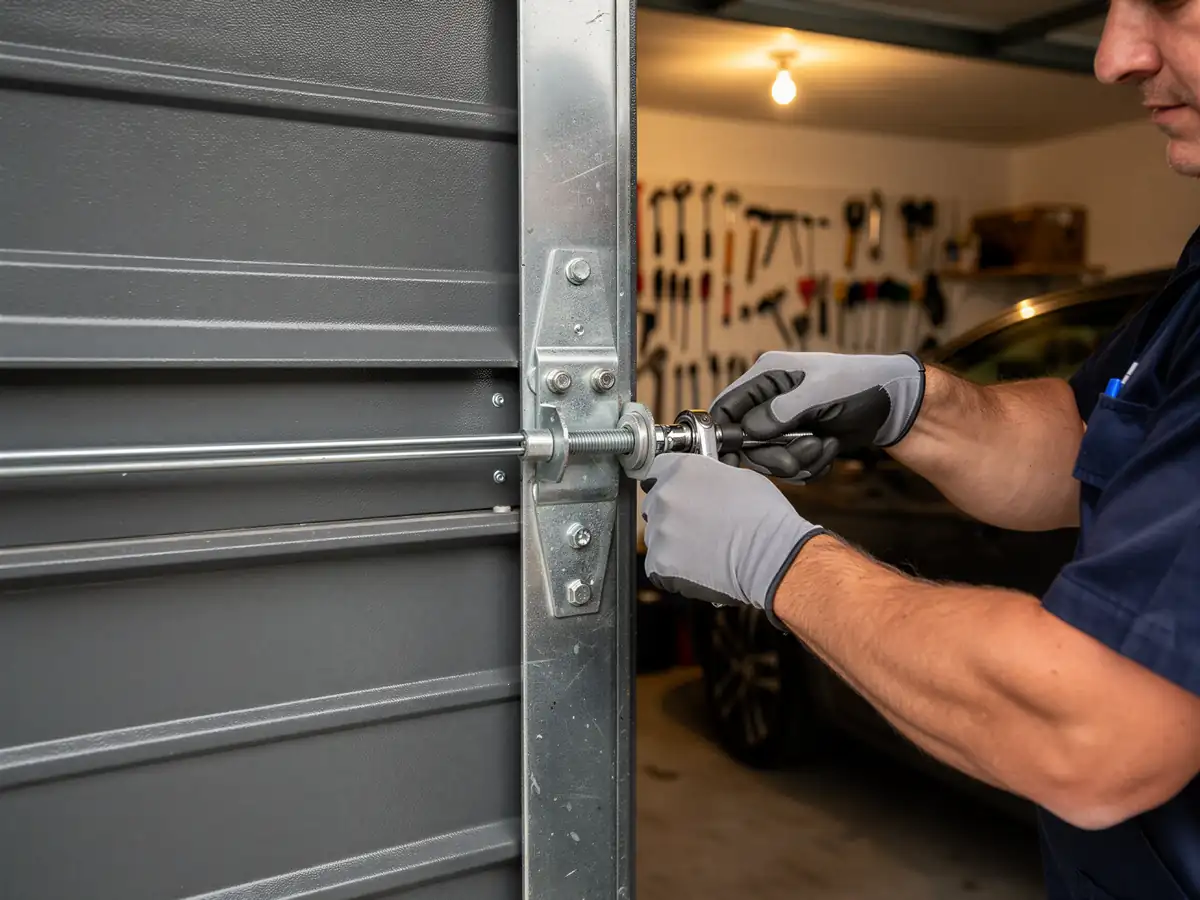
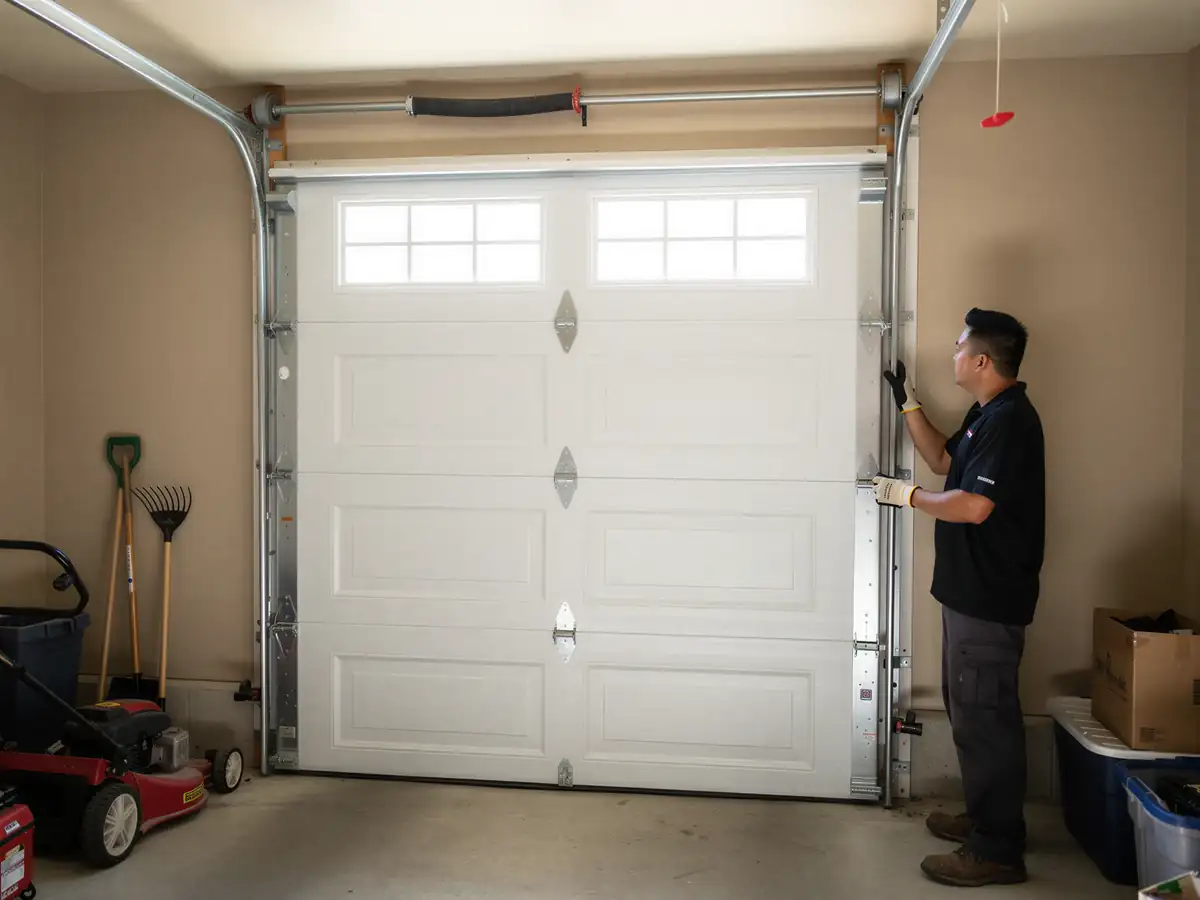
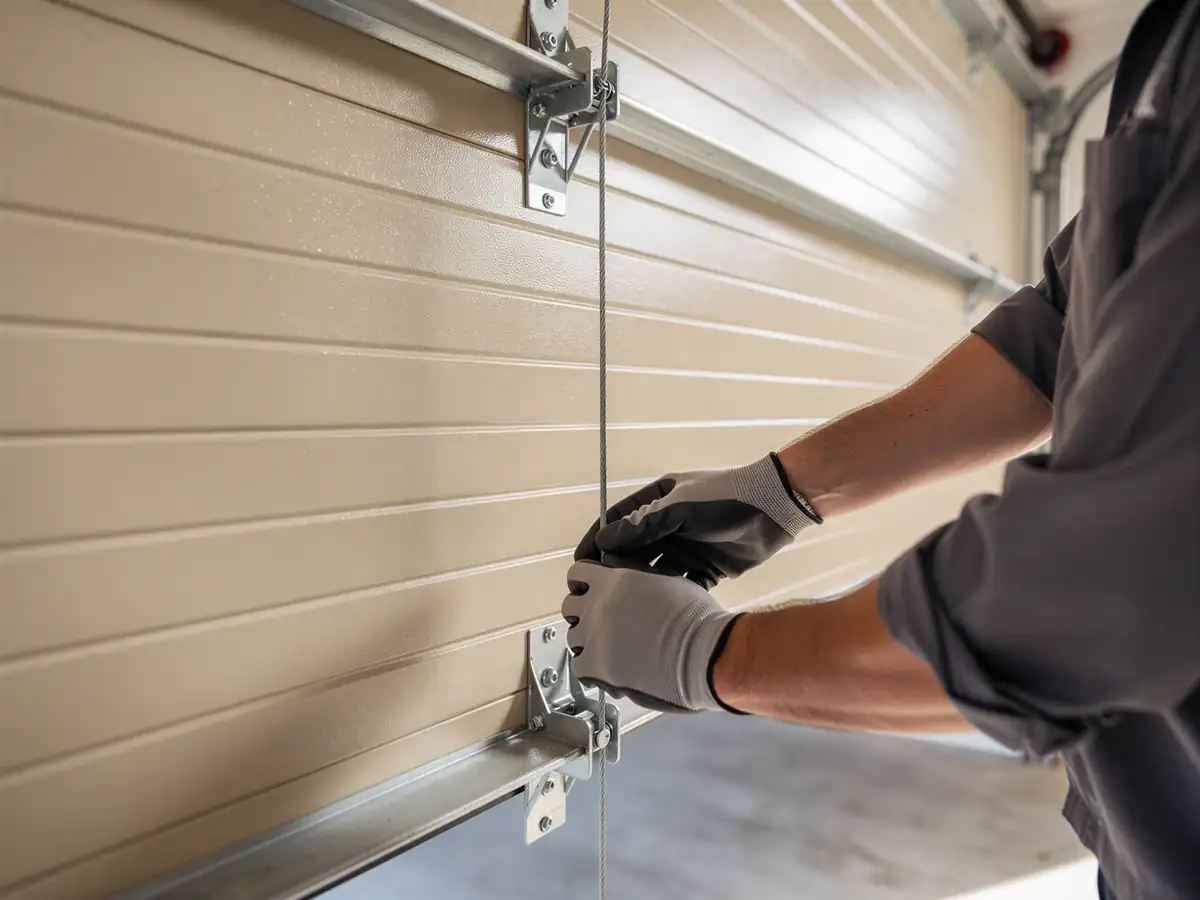
The fix is almost never just the spring. We check both cables, the drums, and the bottom brackets before we call the job done, because replacing a spring on worn cable just moves the next emergency call a few months down the road. On a double door from this era, that's typically two springs matched to the panel weight, new cable on both sides, and a look at the rollers while the door's apart anyway.
How Long You Are Without the Door
A straight spring-and-cable job on a single door is usually done inside one visit, start to finish, once we're on site
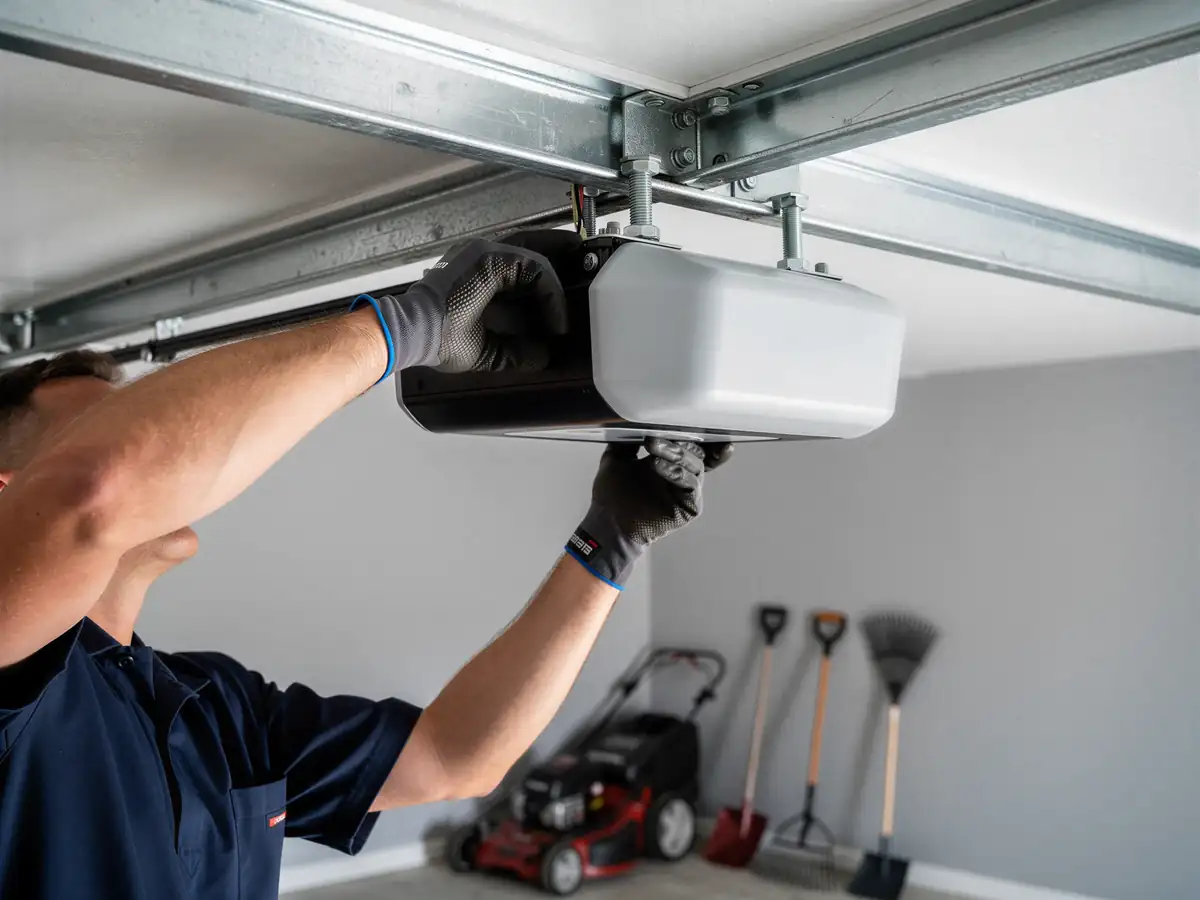
Double doors with worn drums on both sides take longer, because we're not leaving a door half-fixed - both sides get done or neither does. If the opener itself is the failure (burned-out motor, stripped gear) rather than the spring, that's a separate repair and we'll say so before we start, not after.
Winters here run cold and severe for this part of the Front Range
And a dead spring in January means a door that won't close - not a cosmetic problem, a heat-loss and freeze problem for whatever's behind it. We treat a stuck-open door in cold weather as the priority call it is, ahead of jobs that can wait for daylight.
What Is on the Truck
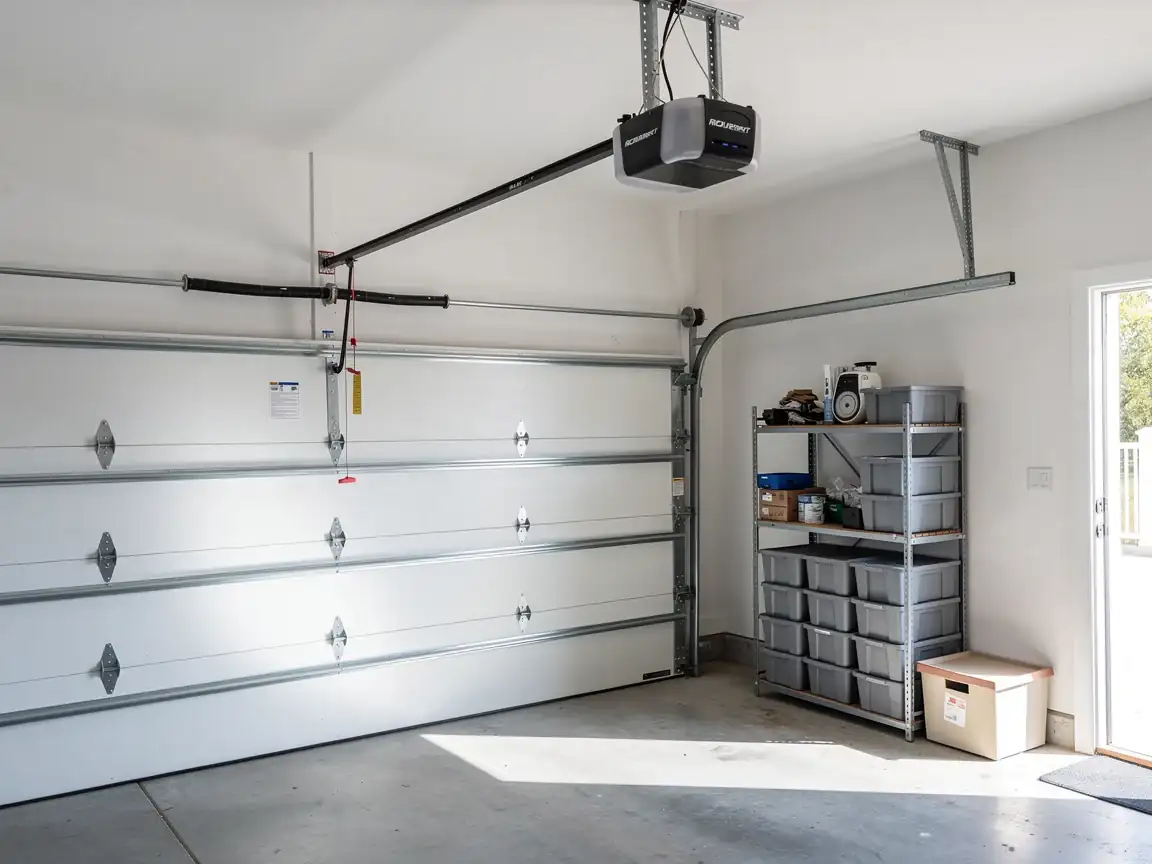
Because the 1970s build era is so common on this side of the service area, we stock torsion springs sized for the lighter panel weights typical of that decade's doors, plus standard-gauge cable to match the original drums rather than the heavier cable some newer doors need. That's a deliberate call, not a guess, given how much of Columbine's housing falls in that window.
We also carry chain-drive opener parts, since a fair number of these original openers are still in service and their owners would rather repair than replace. What we don't carry is every obscure bracket ever made - if a door's been modified with aftermarket hardware over the years, we may need to order a part, and we'll tell you that up front rather than make a second trip and bill you for the surprise.
Doing It Yourself
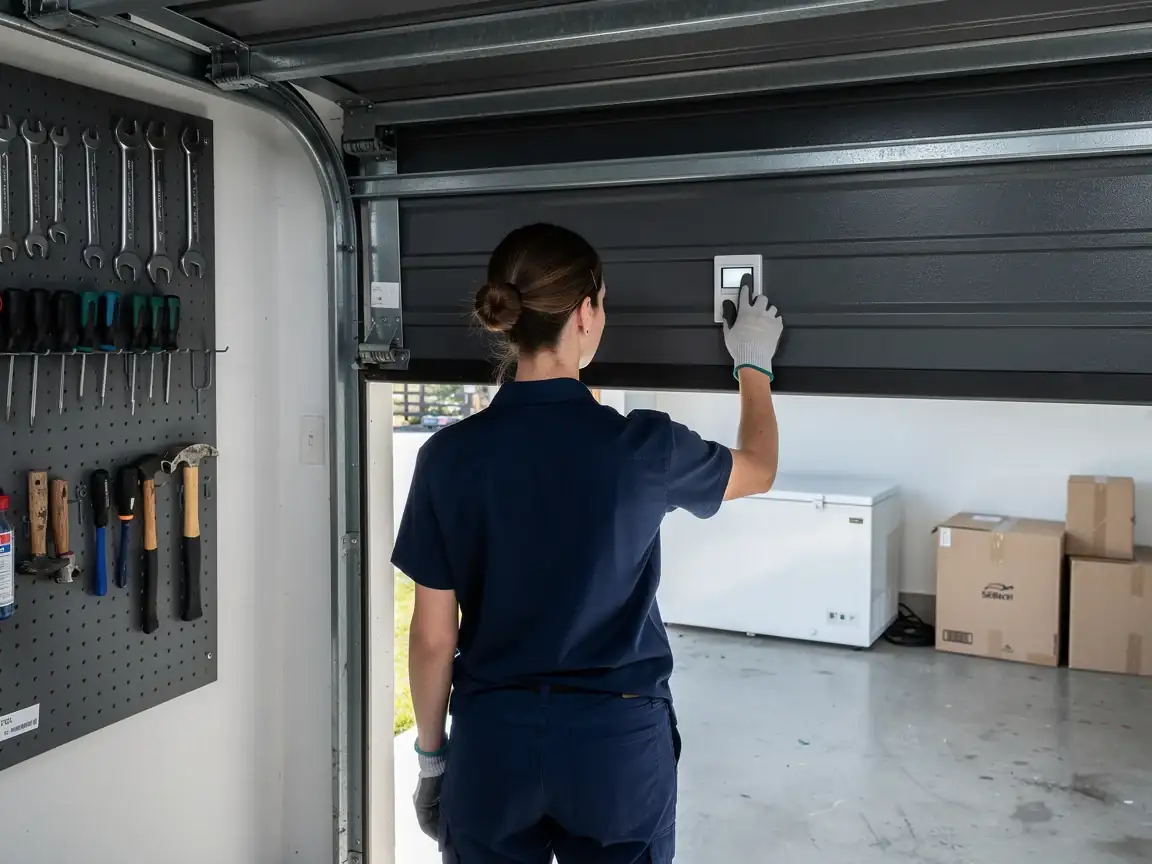
A torsion spring under tension is not a safe DIY repair - that's true everywhere, not just here, and we're not going to pretend Columbine is special in that regard. What is specific to this town is the opener wiring: original 1970s-era openers often ran on two-wire low-voltage connections that don't match the plug-and-play sensors sold in stores now, so a well-meaning safety-sensor swap can leave the opener thinking the door is blocked when it isn't.
If your door is stuck open and it's cold out, closing it manually (after confirming the spring isn't the broken part) is reasonable while you wait for us. If the spring is visibly broken - a gap in the coil, the bar twisted - leave the door alone and call. That's the one line we won't move on.
What Can Go Wrong
The failure we see most often on Columbine's older doors isn't the spring itself
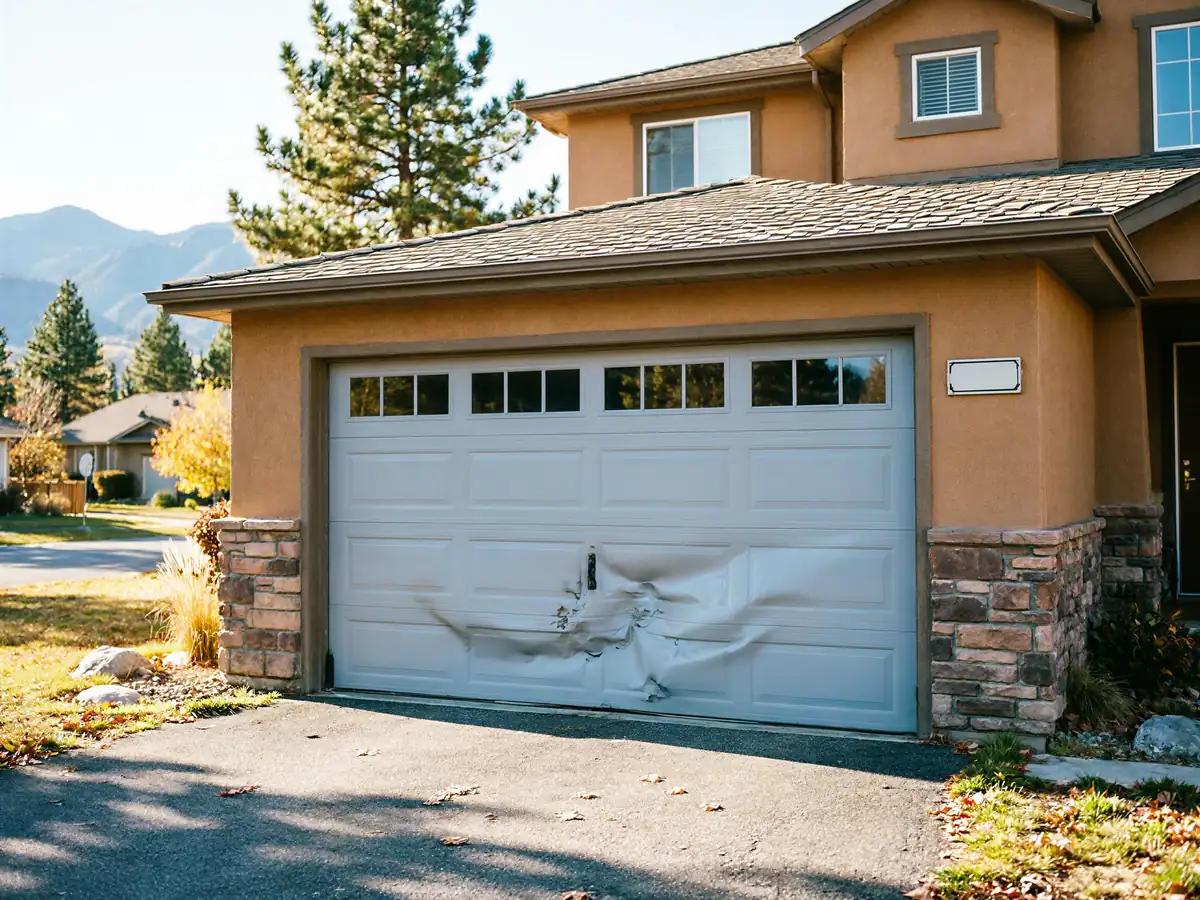
It's what the spring takes down with it: a bent track from the door dropping unevenly, or a cracked bottom panel from the sudden weight shift. On a 1970s door, replacing just the broken part and ignoring the track can mean the door runs rough for months before it fails again.
Here's the honest limit
If a door's hardware has been patched together over decades with mismatched parts, sometimes the repair costs more than a straightforward replacement would, and we'll say so rather than keep billing small fixes. We'd rather tell you that on the first visit than the third.