What Most People Get Wrong
Most people figure a spring snaps because it's old, full stop. That's half the story. Houses here went up mostly in the 1960s and '70s, with the broader build window across the area running 1938 to 2005 and a median around 1979. A spring installed when a house was built has been cycling through decades of Colorado winters, and steel fatigues faster at low temperatures because the metal gets brittle before it gets weak. The crack starts small, usually at a coil near the end of the bar, and it doesn't announce itself. It just lets go, usually first thing in the morning when the door's cold and you're already late.
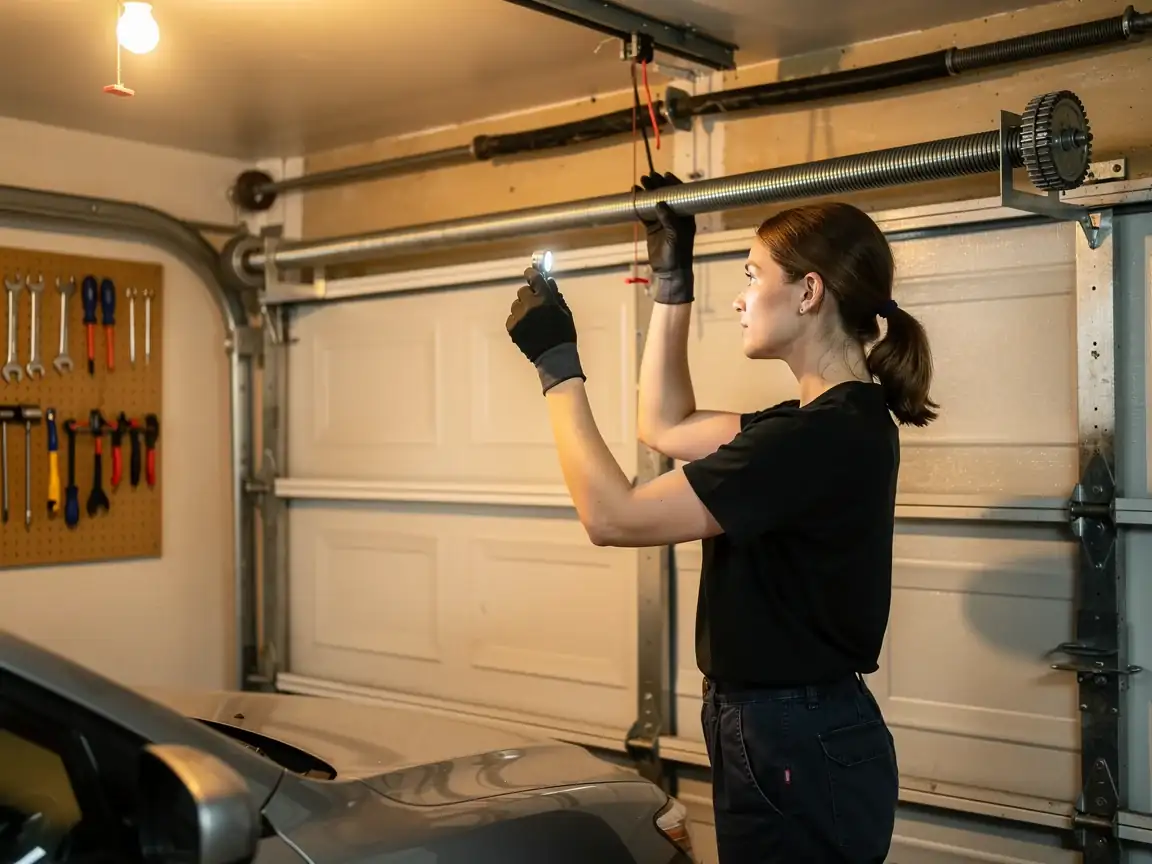
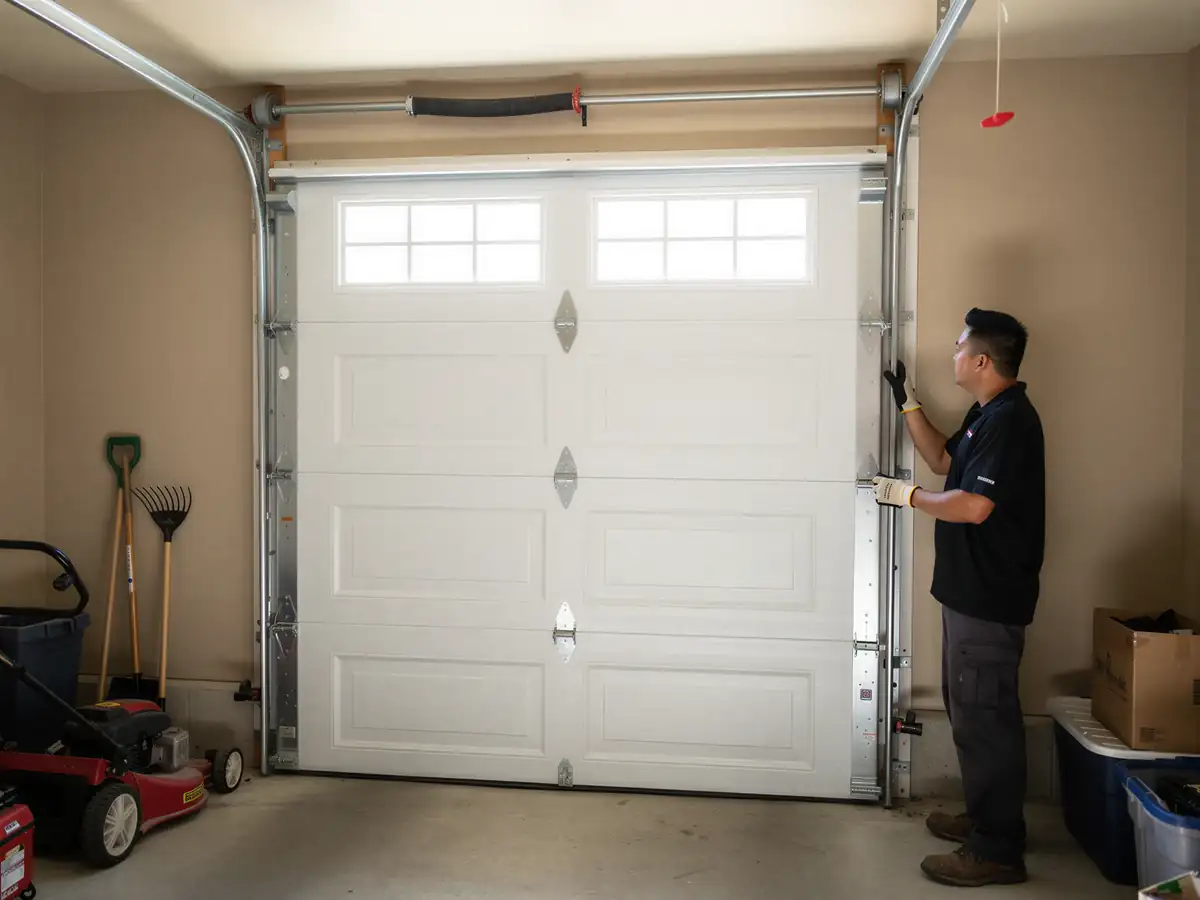
The other mistake is assuming a louder bang means a worse break. Torsion springs on a double door carry real tension, and when one side goes in cold weather, the door can look fine sitting shut even though it's now running on half its lift. People try to open it anyway, the opener strains, and now you've got a spring problem and a stripped gear on top of it. If a door won't lift easily and you hear a flat pop from the garage, stop pulling the cord and stop hitting the opener button.
Doing Nothing For Now
Sometimes waiting is the right call. If the spring is intact and the door still opens smooth, cycles quiet, and closes flush, there's nothing to fix yet. A door that's just stiff in the cold isn't a broken door - grease thickens, the track tightens slightly as the slab contracts, and none of that means failure is coming tomorrow.
Where waiting stops making sense is once you can see a gap in a coil, hear a scrape where there wasn't one, or notice the door sitting crooked in the opening. At that point the spring is doing less work than it was built to do, and the cables and opener are picking up the slack. We won't tell you to replace a spring that's still sound just because it's original to a 1970s build - that's a needless call. But we also won't tell you a visibly cracked spring will hold through another cold snap, because it won't.
The Situation
Highlands Ranch and the service area around it cover 31 named sections of mostly 1960s-70s tract construction
With newer infill pushing the build range out to 2005. That mix matters for springs specifically: a house from 1971 likely has had at least one spring replacement already, while something built in the '90s might still be running factory original hardware that's just now hitting its wear limit.
Across the service area there are 102,758 households
And 52,452 of those are owner-occupied houses - the kind with a garage and a door that gets used daily, not a shared structure. Median household income runs $129,480, and what that tends to mean on the ground is more upgraded insulated steel doors replacing bare single-layer originals, rather than people patching the same door for twenty years. a mile north, two miles west, run the same tract-era stock as the rest of the area, so the same spring-age pattern shows up there too.
- 102,758 households
- $129,480 median household income
How Local Conditions Play In
This area sits in a severe cold climate band, and that's the detail that turns an aging spring into a broken one. Steel loses ductility as temperature drops - it doesn't bend as far before it cracks, it just holds tension until it doesn't. A spring that would have flexed and worn gradually in a milder climate instead reaches its fatigue point in a sudden cold snap, often overnight when the garage itself drops close to outside temperature.
This is also why spring failures cluster around the first hard cold of the season rather than spreading evenly through the year. A spring that was already thinning from forty-some years of cycling can make it through a mild stretch and then fail the first morning it's in the teens. If you've noticed your door getting louder or slower to lift as the weather's turned, that's worth a look before it's a no-lift situation on a morning you need to leave the house.