Serving Highlands Ranch, CO & nearby
(720) 538-5265
Highlands Ranch, CO

What That Grinding, Popping, or Squealing Sound Is Actually Telling You

Highlands Ranch homes built between 1938 and 2005 carry different hardware, and cold-season contraction changes what a squeal, grind, or pop actually means.

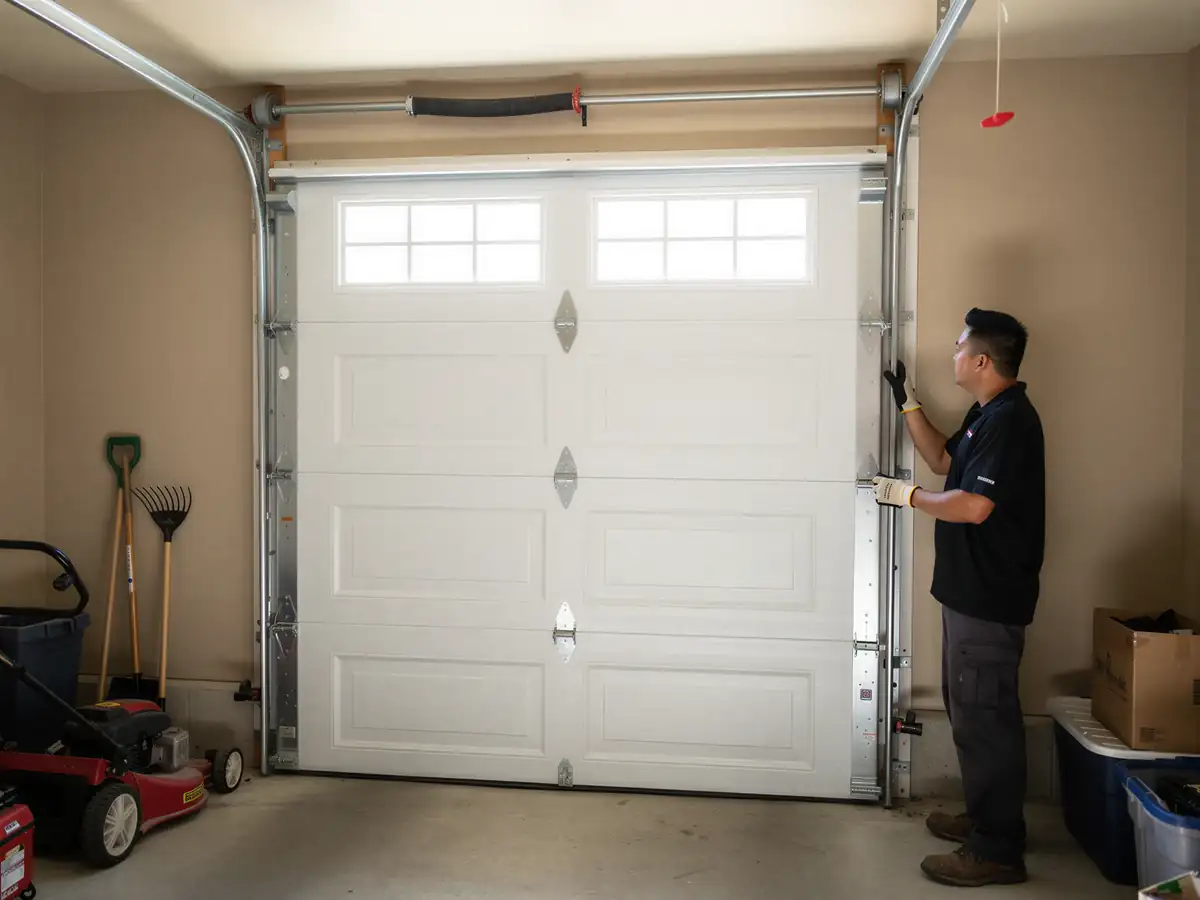
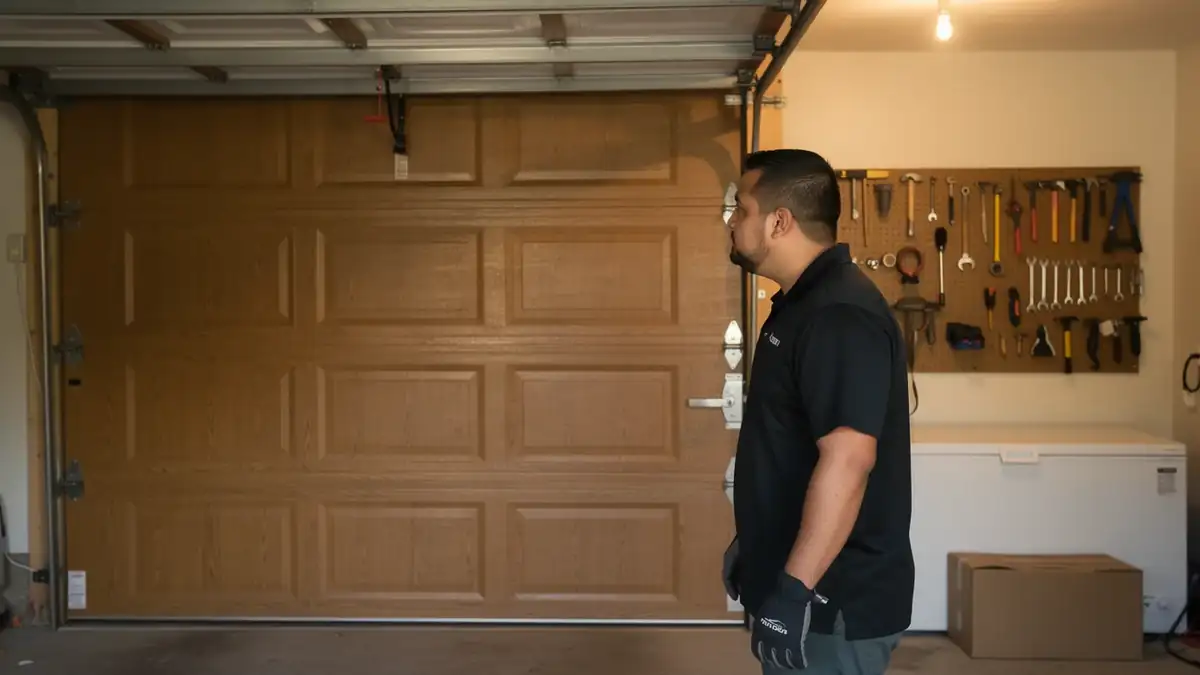
A technician stands in a garage looking at a closed brown garage door.

What Most People Get Wrong

Most homeowners treat every garage door noise the same way: ignore it until it stops working. That habit doesn't hold up well here. Houses in this service area went up over a long stretch, 1938 through 2005, with the median landing around 1979, and the hardware installed during that run wasn't uniform. A house built in the early wave might still run extension springs and a lightweight track bracket. One from the later stretch is more likely on torsion hardware with a heavier shaft. A grinding noise on one setup means a bearing is dry. The same grinding noise on the other setup can mean the torsion spring is winding unevenly on its shaft, which is a different repair entirely and not one you want to guess at.\n\nThe second mistake is assuming a squeal always means the rollers. Sometimes it does. Sometimes it's the opener's drive gear, or a hinge that's lost its galvanized coating after enough winters of condensation and thaw. Across the 31 named areas this company works, from the closest ridgelines to towns ten and fifteen miles out, the housing stock spans six decades, and that spread means the diagnosis has to start with when the house was built, not with a generic checklist.

Doing Nothing For Now

Not every noise needs a same-week call. A single soft rattle when the door closes, especially if it's been there a while and hasn't changed, is often just a loose bracket or a hinge screw that backed out a turn. That's a five-minute tighten, and plenty of owners handle it themselves with a wrench.\n\nWhat doesn't belong on a wait-and-see list is a grinding noise that's new, a loud bang during travel, or a noise that's gotten louder over a couple of weeks. Torsion springs on older hardware don't announce a failure politely - they either snap clean or fray audibly in the days before, and a door running on a spring that's about to go is a real safety issue, not a maintenance inconvenience. The honest limitation here: a phone description of a noise only gets you so far. Two different problems can sound nearly identical through a closed garage door, and guessing wrong means paying for a part that wasn't the issue. If a noise is new, worsening, or paired with the door moving unevenly, that's worth a look rather than a guess.

The Situation

This company works Highlands Ranch and the ring of named areas around it - a mile north two miles southeast two miles west are the closest, with Louviers, Columbine, Meridian, and a dozen others spreading out to four, six, and eight miles, and the furthest points, Genesee, Twin Lakes, and Perry Park, sitting seventeen to twenty miles off. Thirty-one named areas in all, with a housing mix that runs from 1938-era original construction to homes finished as late as 2005.\n\nThat spread matters more than it sounds like it should. A door and opener installed in the 1960s or 70s - which is the bulk of the stock across this area - has had forty to sixty years of seasonal cycling on its hardware. Steel contracts and expands, grease dries out, and fasteners back off a thread at a time. A noise that shows up now, on a house that's been quiet for years, is usually the hardware finally telling you something after that many winters of freeze and thaw, not a sign the door is simply getting old in some vague sense.

How Local Conditions Play In

This area sits in a severe cold climate band, and that changes what a given noise points to depending on the season. Grease inside a torsion spring or a bearing plate thickens as temperatures drop, and a door that ran silent in August can start groaning in January for no reason other than the cold slowing the lubricant down. That groan usually goes away once the grease warms up through use, which is a different situation from a grind that persists no matter the temperature.\n\nCold also makes metal contract, and on hardware that's already decades old - again, a lot of this area's stock dates to the 1960s and 70s build wave - that contraction can tighten tolerances just enough to turn a quiet roller into a squealing one for the first time. It's not a sign the part failed overnight; it's a sign the part was already worn and the cold found the gap. Owners sometimes read a winter noise as an emergency when it's really a wear issue the season exposed. Sorting which one you've got usually comes down to whether the noise is temperature-dependent or constant.
How it works

From “it’s stuck” to “it’s fixed”

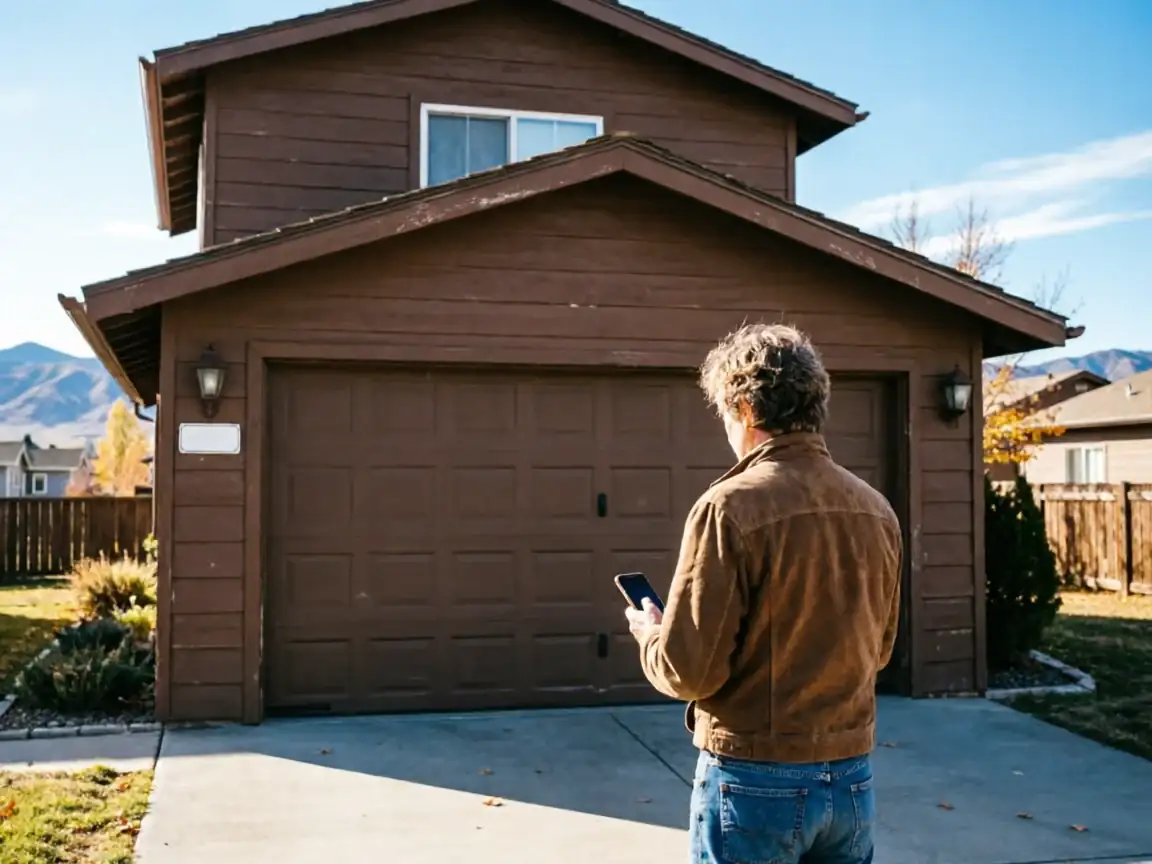
A person stands in a driveway, looking at a brown garage door.

Tell us what’s wrong

Describe the symptom - won’t open, loud bang, opener runs but the door won’t move.

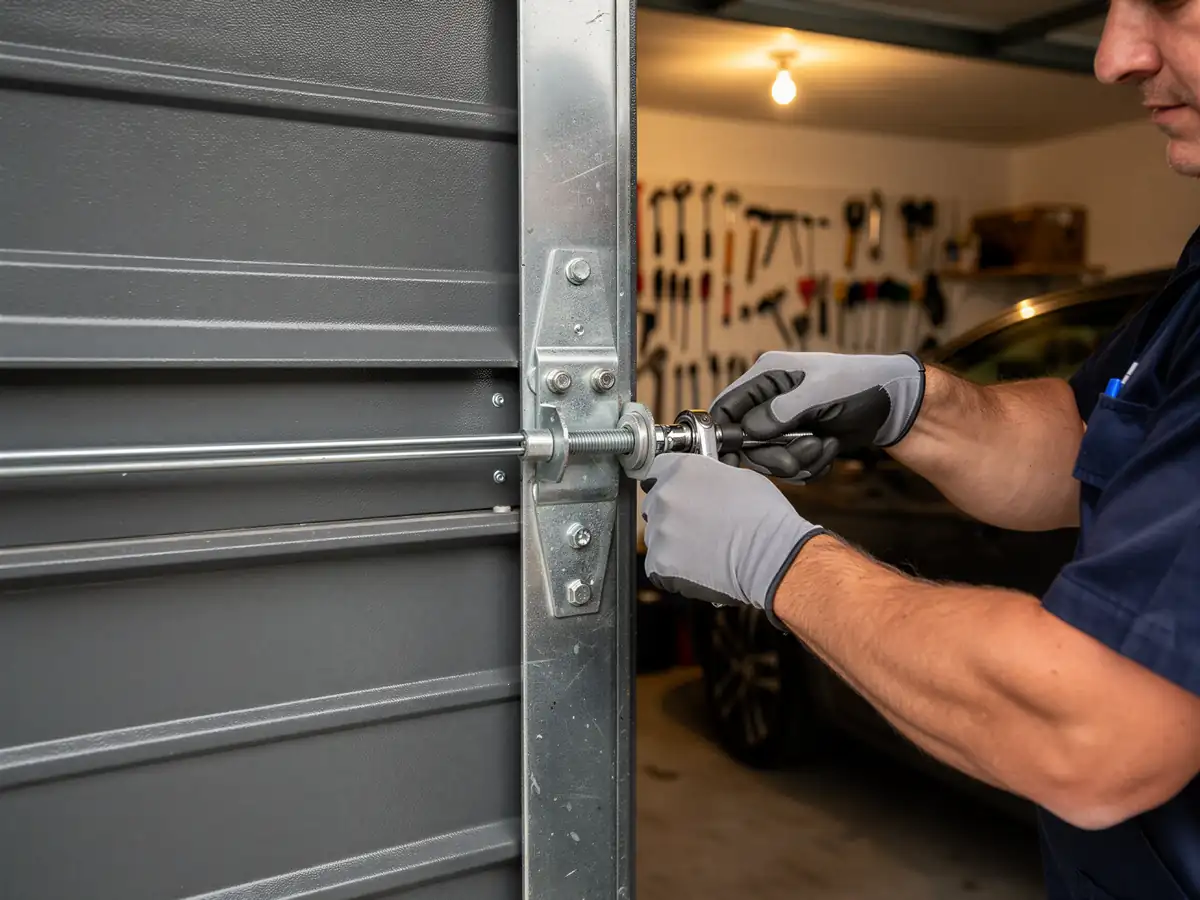
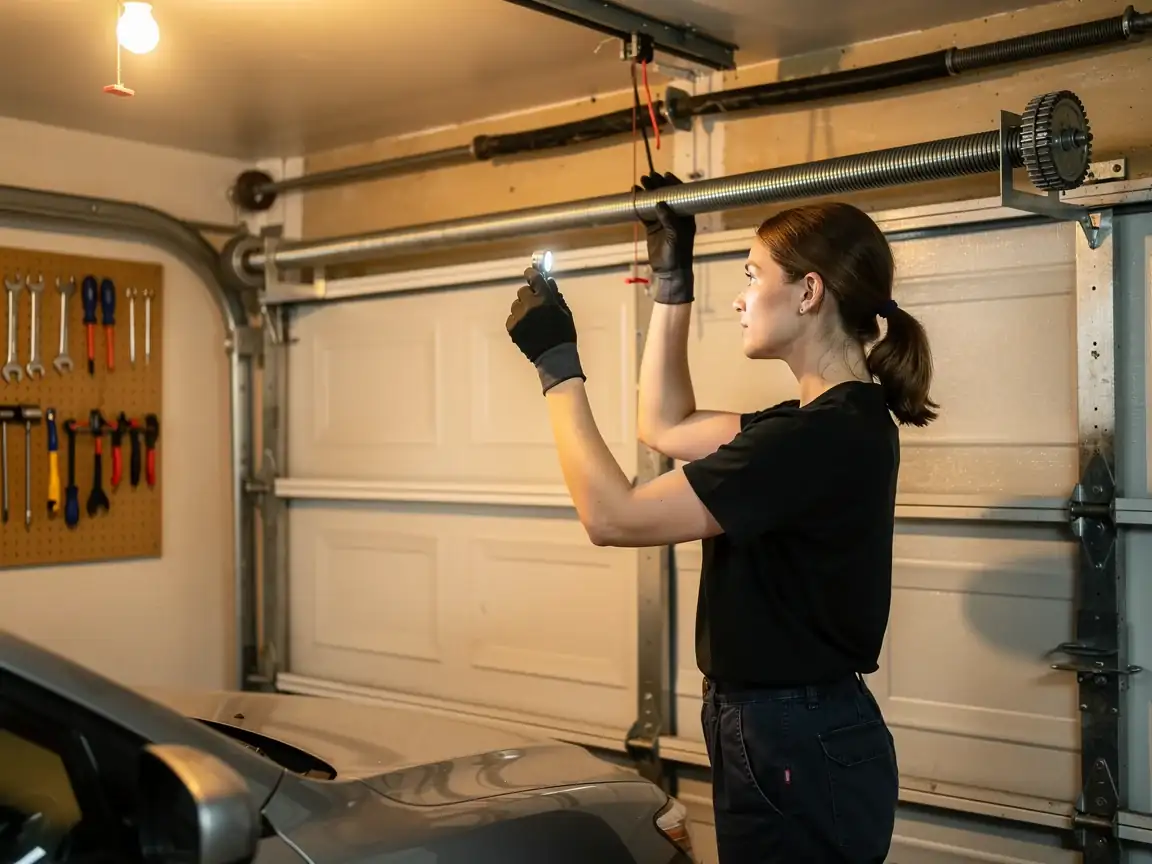
A technician wearing gloves inspects a garage door torsion spring with a flashlight.

On-site diagnosis

A technician tests the door under power and by hand and finds what actually failed.

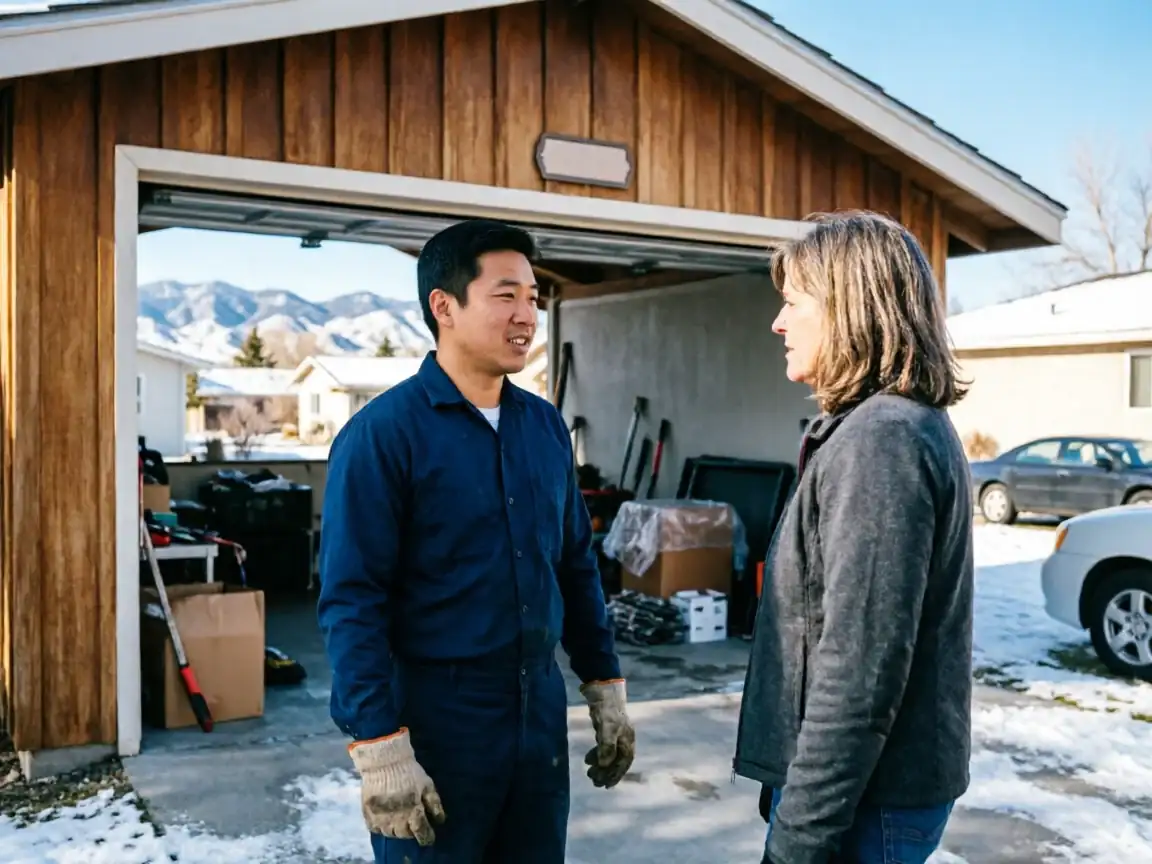
A technician in a blue uniform talks to a woman in front of an open garage.

Clear, up-front plan

You get the fix that’s needed and what drives the cost - before any work starts.

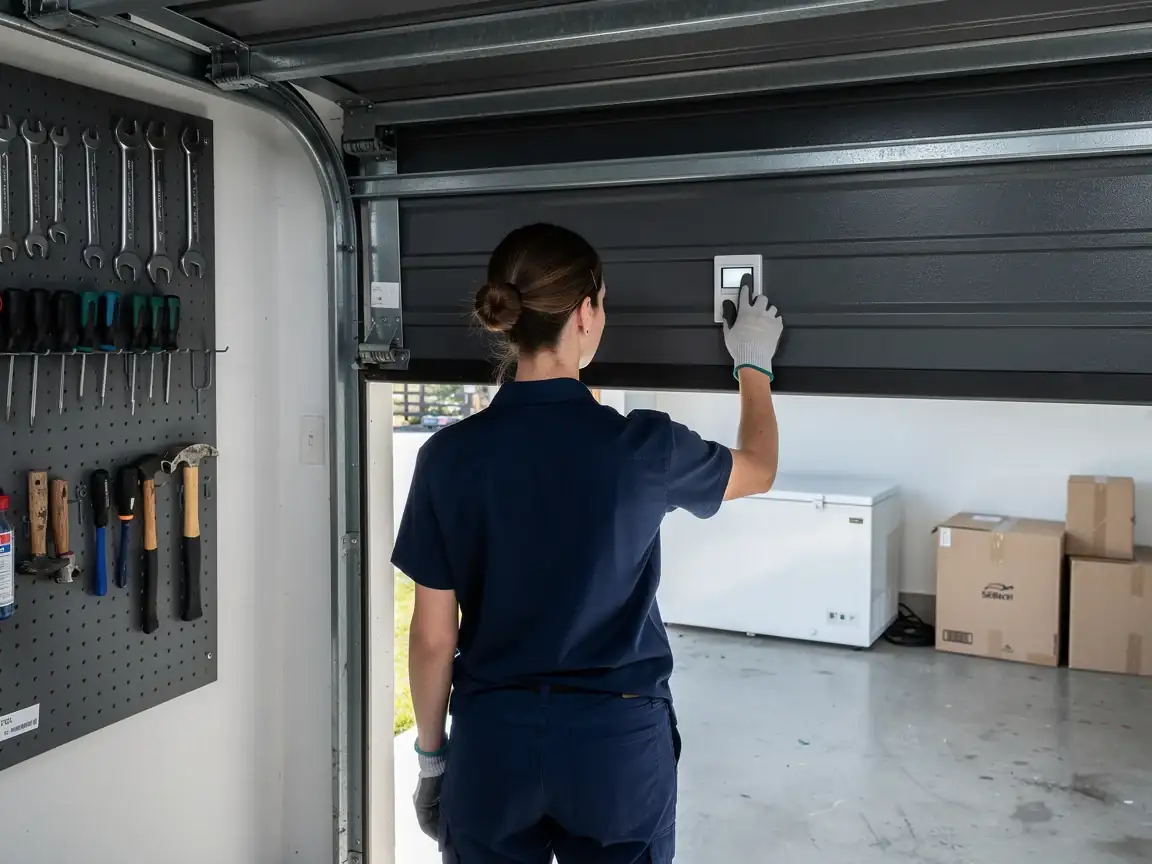
A technician in a blue uniform adjusts a wall-mounted control panel on a gray garage door.

Repaired & tested

The repair is done, the door is set true and tested, and the work area left clean.

Not sure which repair your door needs in Highlands Ranch, CO? Describe what it’s doing - every job starts with a diagnosis.

How we work

What to expect

Diagnosis firstEvery visit starts by finding what actually failed - not a pre-written parts list.
The right part for the doorSprings and openers matched to the door’s weight and age, so the fix holds up.
Straight answersWhen a repair makes more sense than a replacement - or the reverse - you hear it plainly.
Clean, careful workTension released safely, hardware set true, the door tested under power before we leave.
What we do

Garage Door Services

Repair and installation work for Highlands Ranch homes and businesses.

Questions

Frequently asked

Straight answers about garage door repair in Highlands Ranch. Still unsure? Ask us directly.

My garage door started squealing only in cold weather. Is that serious?

Often it's grease inside the bearings or spring stiffening in the cold, which shows up as a temperature-dependent squeal that eases once the door's been run a few times. It's worth checking, but it's not usually the same urgency as a grind that happens regardless of temperature.

How do I know if a noise means the spring is about to break?

A spring nearing failure usually sounds like a dry, uneven grind that gets louder over days or weeks, sometimes paired with the door hanging crooked or moving in jerks. A sudden loud bang during operation can mean it's already gone. Either way, that's not a wait-and-see noise.

Does the age of my house matter for diagnosing a noise?

Yes. Houses in this area were built anywhere from 1938 to 2005, and the hardware installed depended on the decade. Extension-spring setups, lighter track brackets, and older torsion shafts all make different noises for different reasons, so knowing roughly when the house and door were built narrows things down fast.

Ready to get your garage door sorted?

Tell us what it’s doing and where you are in Highlands Ranch - we’ll take it from there.

Request a QuoteCall