Why It Happens Here
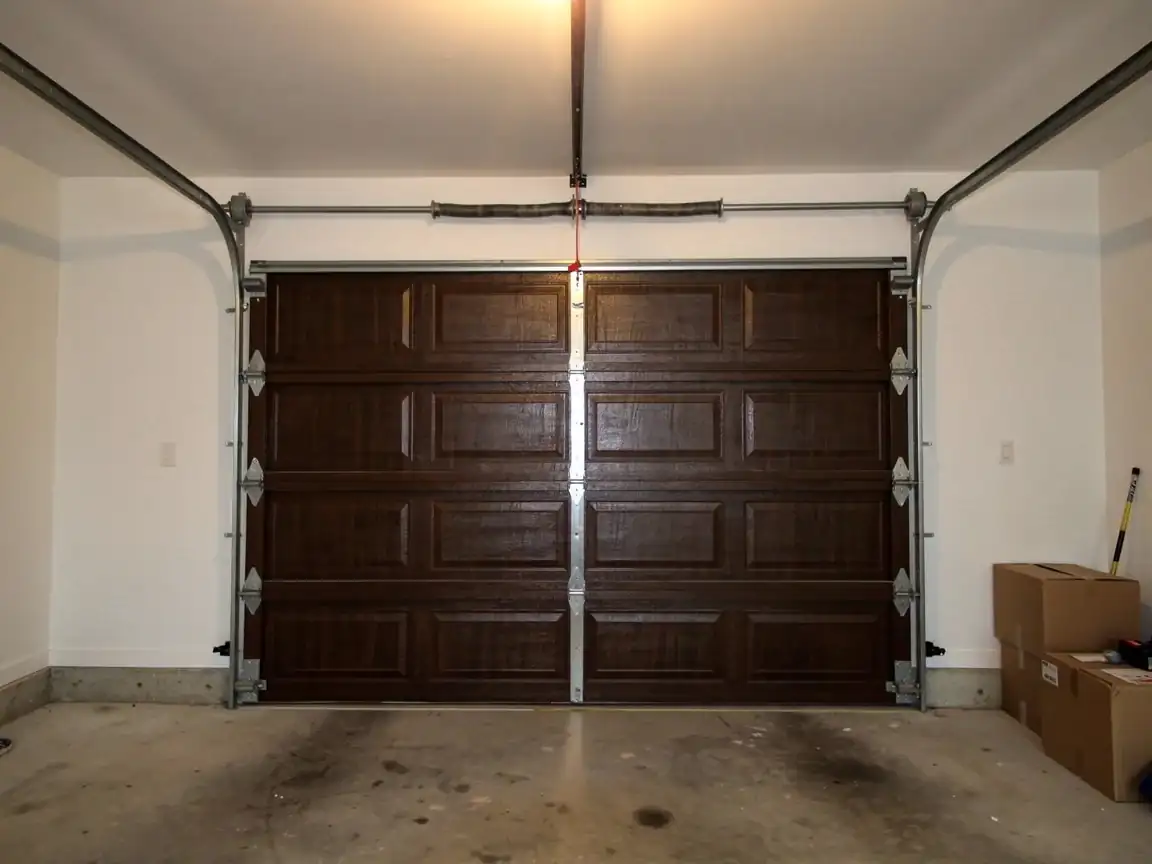
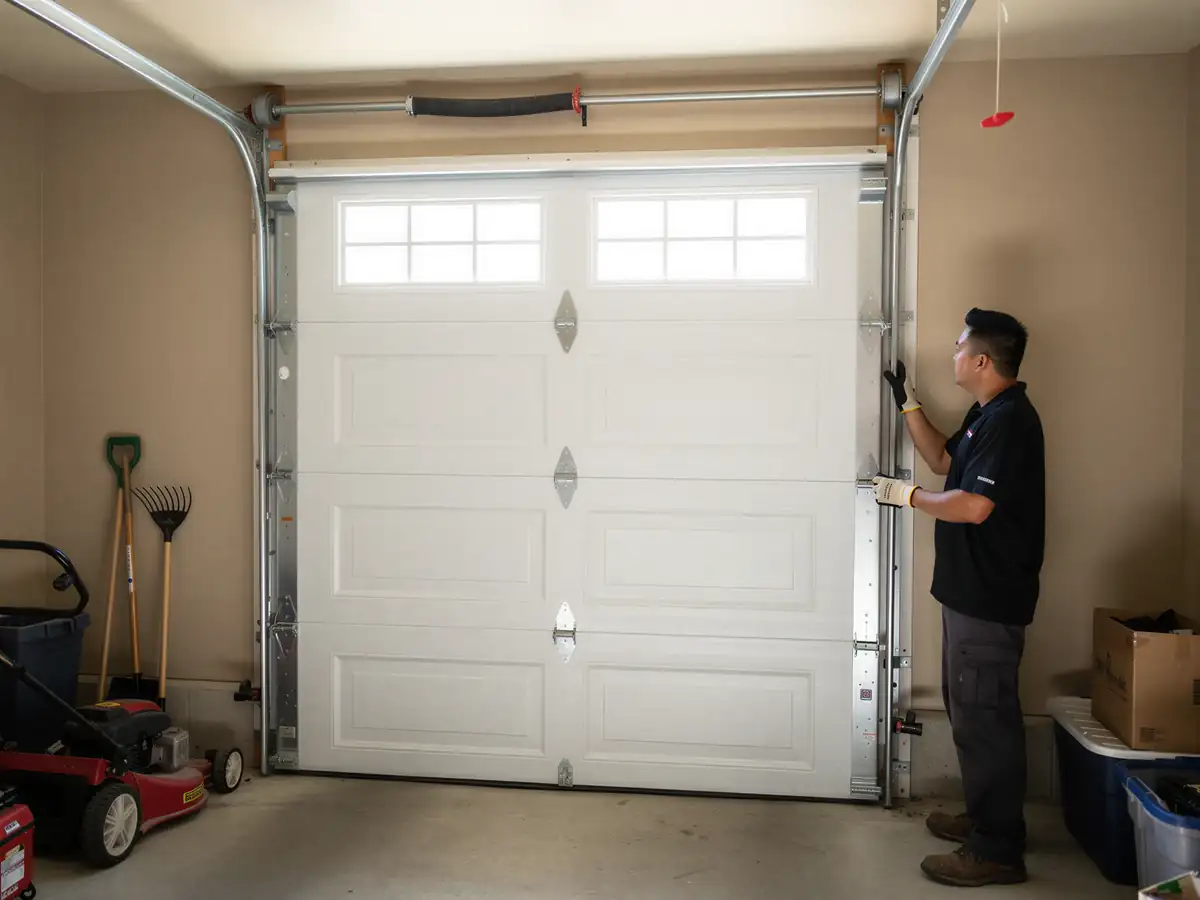
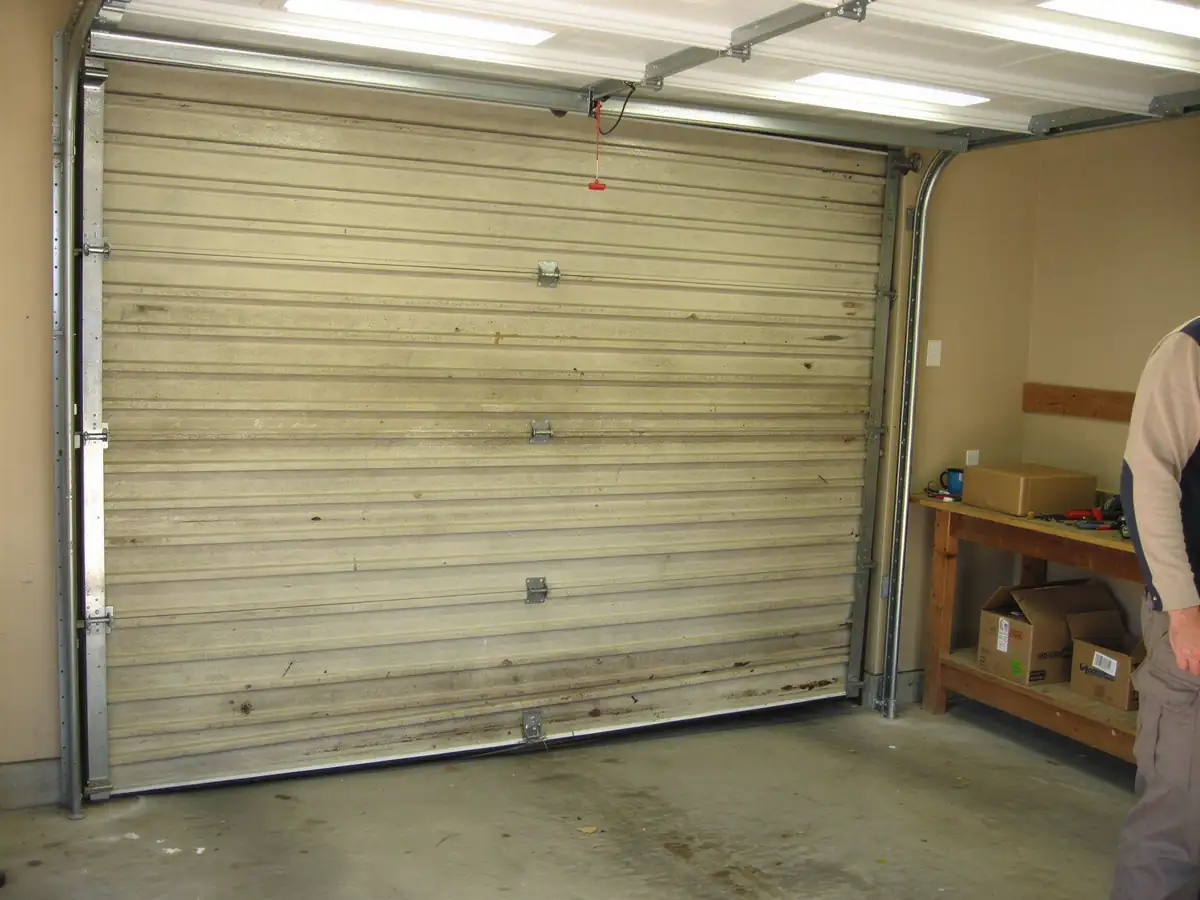
The Pinery's housing stock is newer than a lot of the area we cover - most of these houses went up around 1995, not the 1960s and 70s ranch stock you find closer to Highlands Ranch. That matters for off-track doors because of what builders were putting in during the mid-90s: longer extension-spring setups on wider two-car openings, often with plastic or composite rollers instead of steel. Those rollers wear down faster, and when one seizes or cracks, the door doesn't just stick - it walks sideways off the track on that side while the other side keeps moving. You get a door racked at an angle in the opening, sometimes jammed against the track rather than hanging loose off it.
Cold is the other half of it. This area sits in a severe cold climate band, and a 30-year-old nylon roller that's already brittle from age gets more brittle still on a sub-zero morning. A door that limped along fine in October can jump track the first hard freeze of the year. We see this pattern a lot in homes built in that mid-90s wave - it's less about age and more about the specific roller material that was standard then.
How Long You Are Without the Door
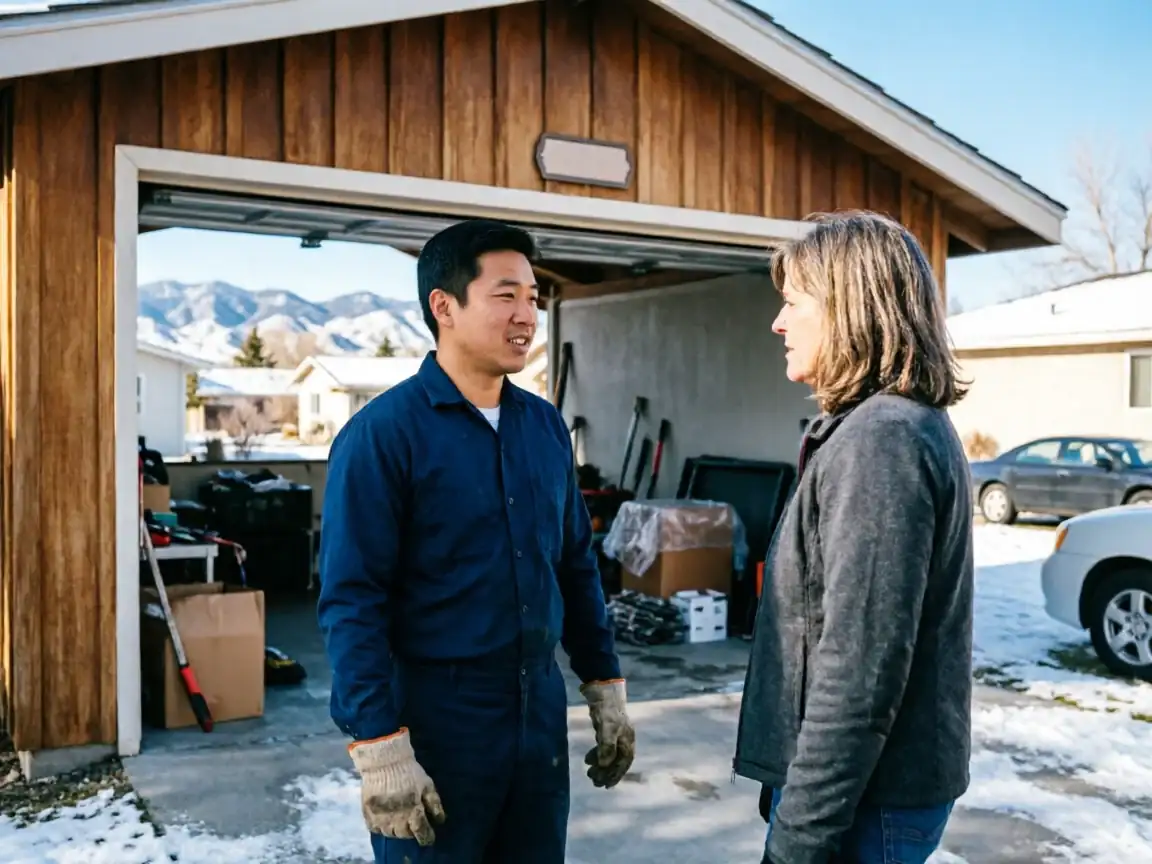
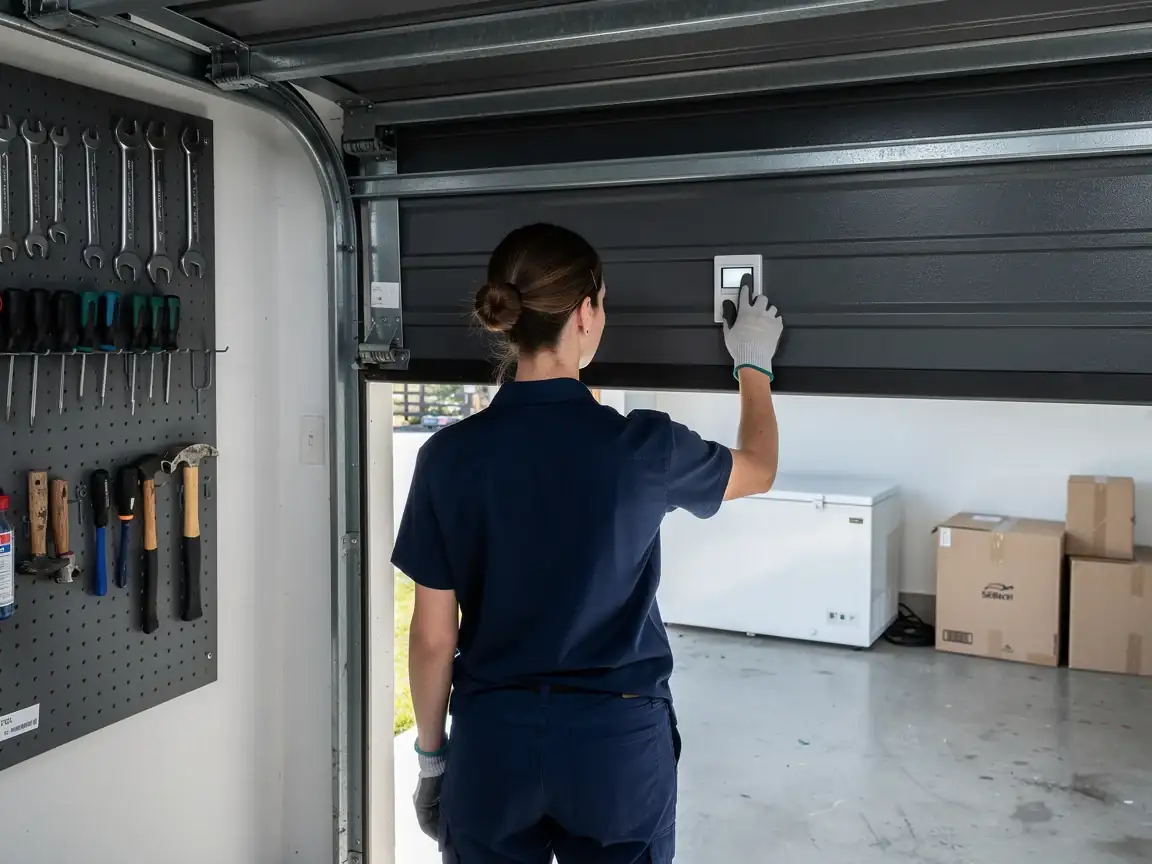
We run out of Highlands Ranch, and The Pinery sits about 13 miles out, so plan on travel time before a tech is standing in your driveway - we don't keep a crew stationed in The Pinery itself. Once someone's on site, getting a door back on track is usually a same-visit job: the track gets straightened or the bent section swapped, the roller gets replaced, and the door gets re-tensioned and tested on the opener. What it isn't is a five-minute fix. If the door's been forced while off track - someone tried the opener a few times after it jumped - the panel can bend further, and that turns a roller-and-track call into a panel replacement, which takes longer because panels aren't something we carry in every color and style on the truck.
The Symptom
An off-track door usually announces itself before it jams completely
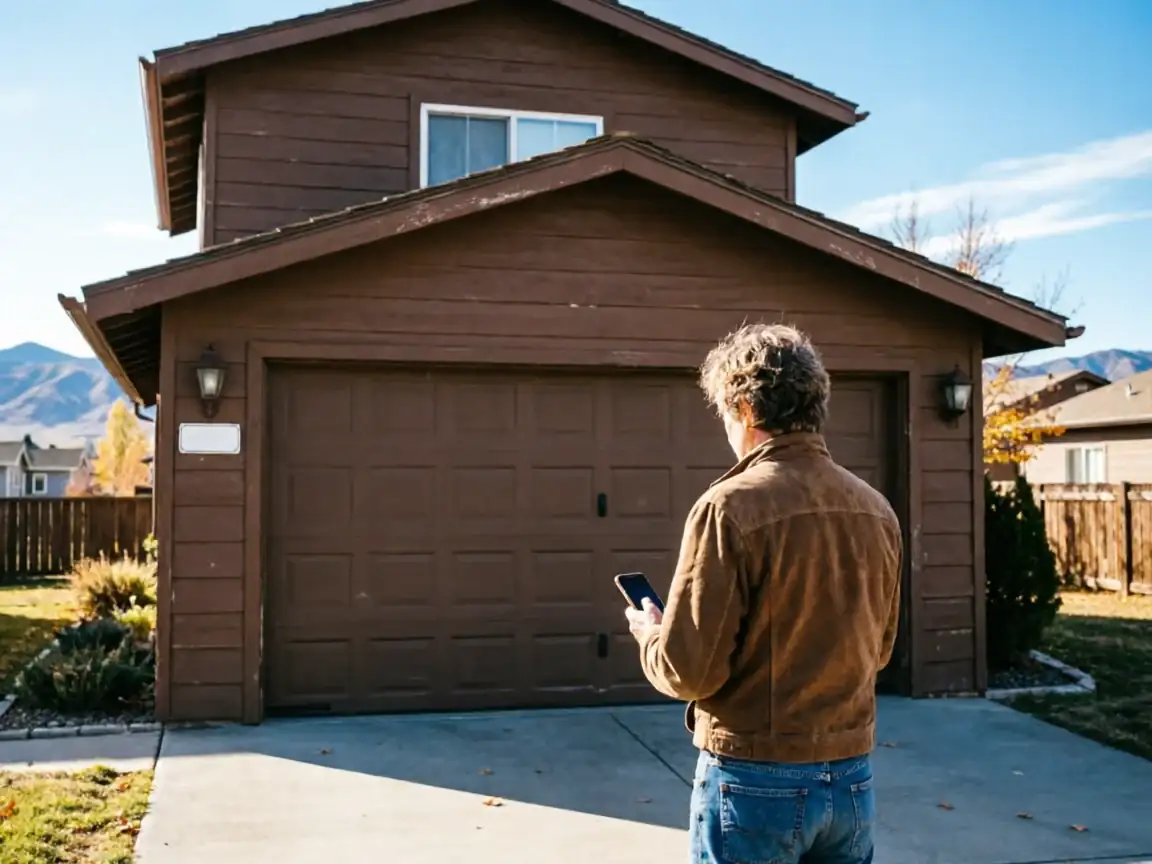
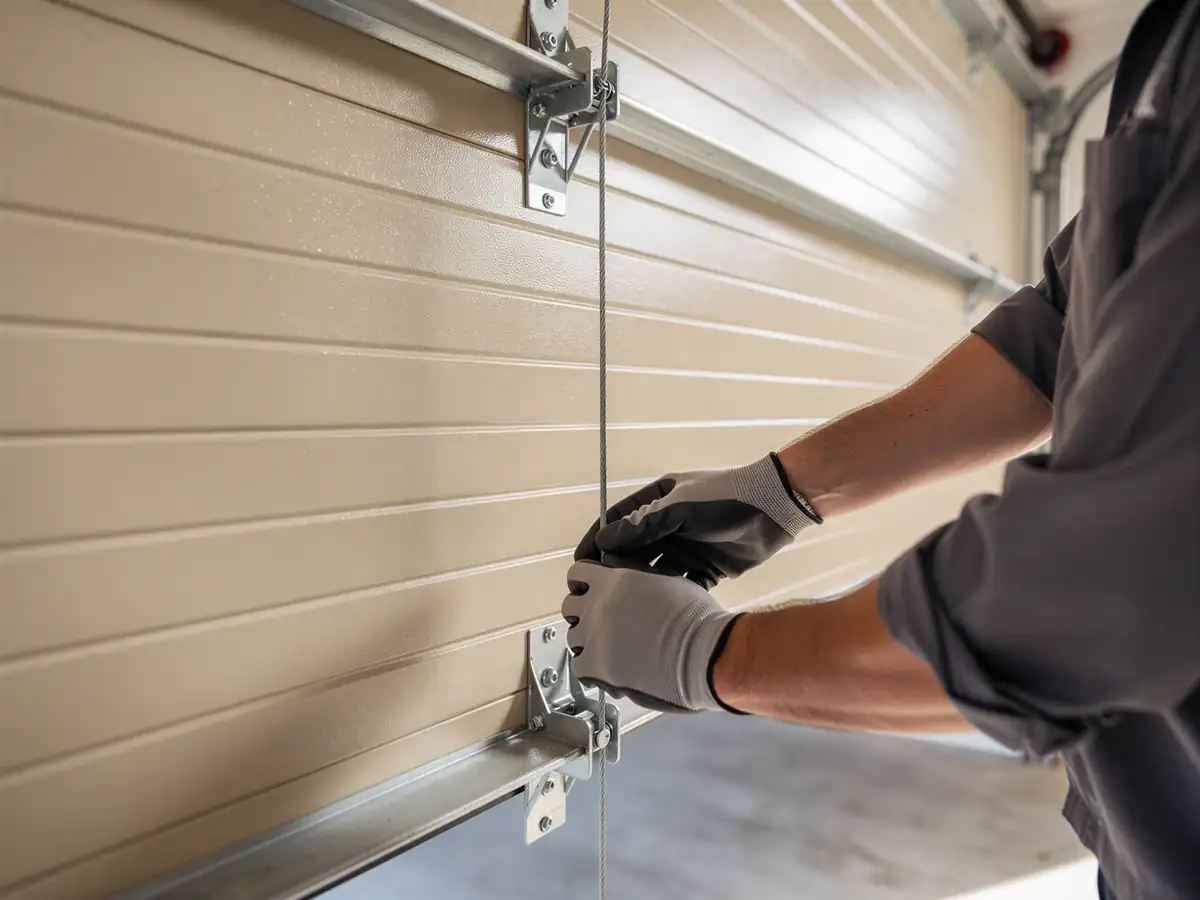
Watch for a door that closes unevenly, dropping faster on one side than the other, or one that leaves a visible gap between the bottom panel and the floor on just one corner. You might hear a grinding or scraping noise near the top of the track as the door travels, especially on colder mornings when the metal's contracted slightly and a worn roller has less room to move. Sometimes the cable on one side looks slack while the other stays taut - that's the door already riding partly off its rail even though it hasn't jumped all the way out yet.
In households across this area
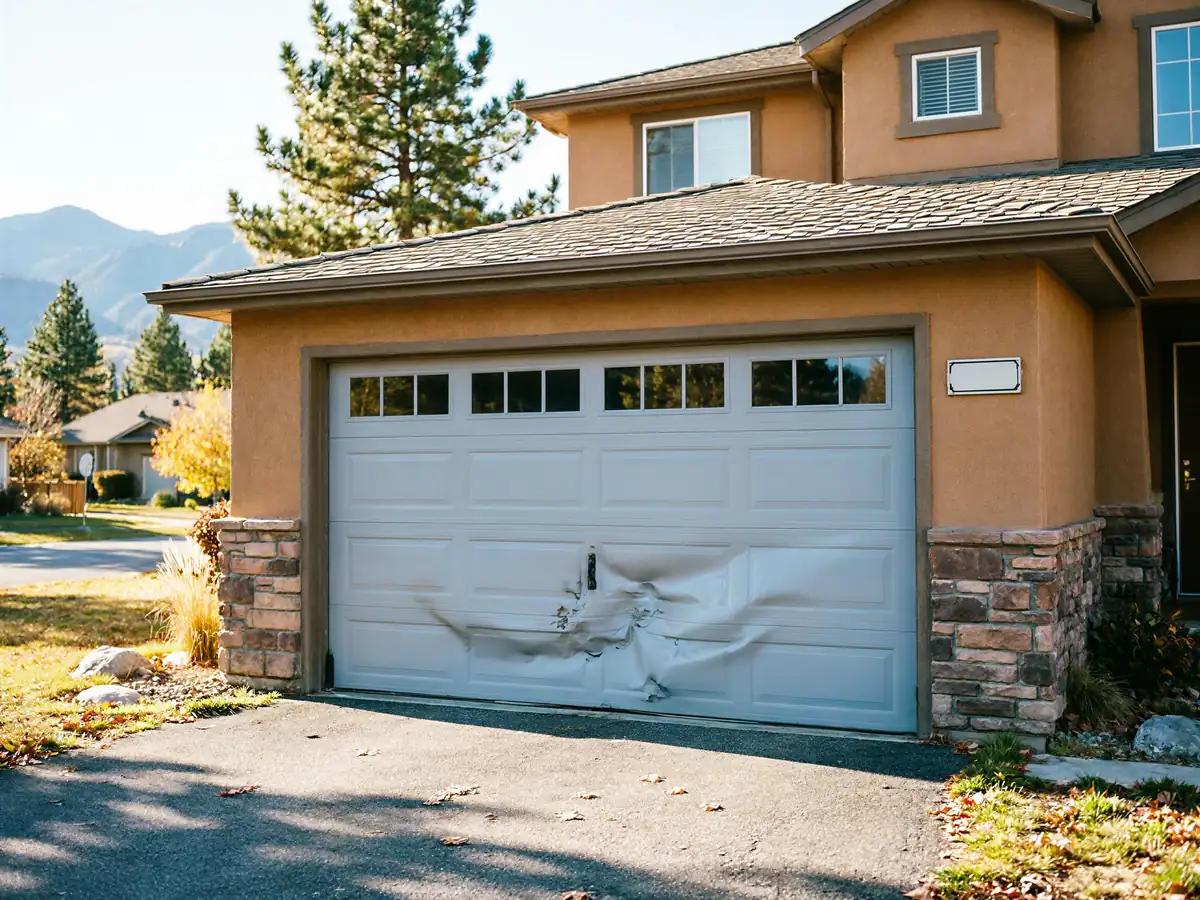
Where the median income runs well above $170,000 and most owners have a two-car door on a finished garage, this often gets caught early just because people notice something off with a door they use daily. The real danger sign is a door that's stopped moving mid-cycle and sits crooked in the opening. At that point, stop using the opener. Pulling the door the rest of the way with a motor that's fighting a bent track can crack a panel or snap a cable under tension.
Doing It Yourself
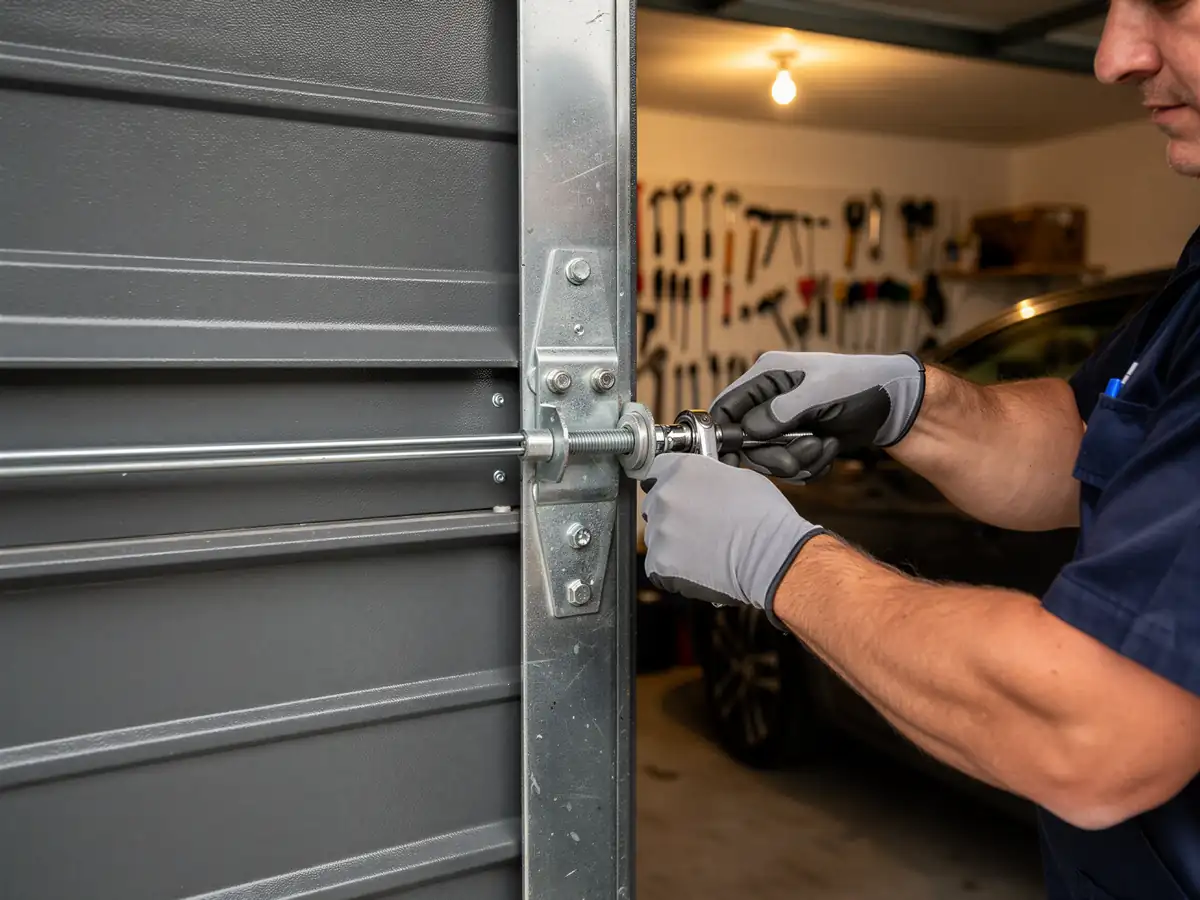
There's a limit to what's safe to handle yourself here, and it's worth being honest about it. If the door is only slightly off - one roller has popped out of the track but the door still sits level and closes under its own weight when you guide it by hand - you can sometimes walk it back onto the rail with the opener disconnected and the door moved manually. Wear gloves, and never put your fingers near the track while the door is moving.
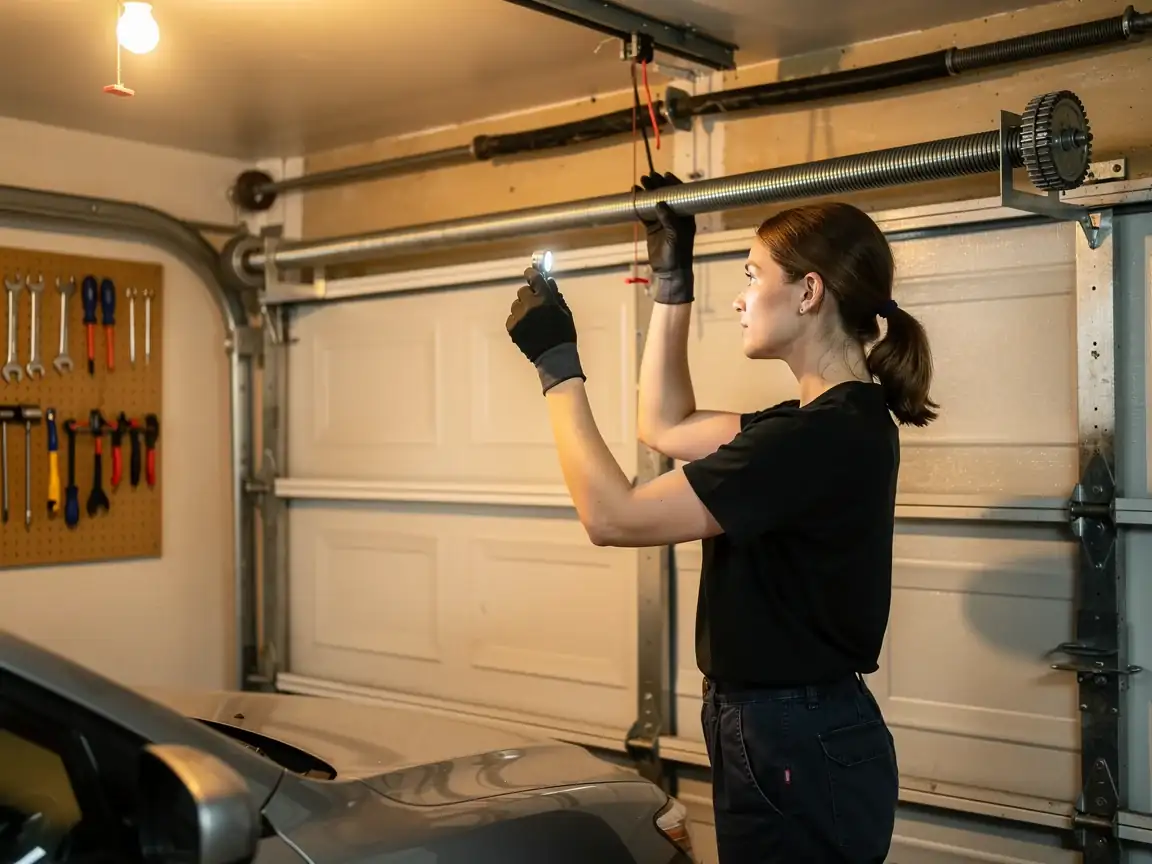
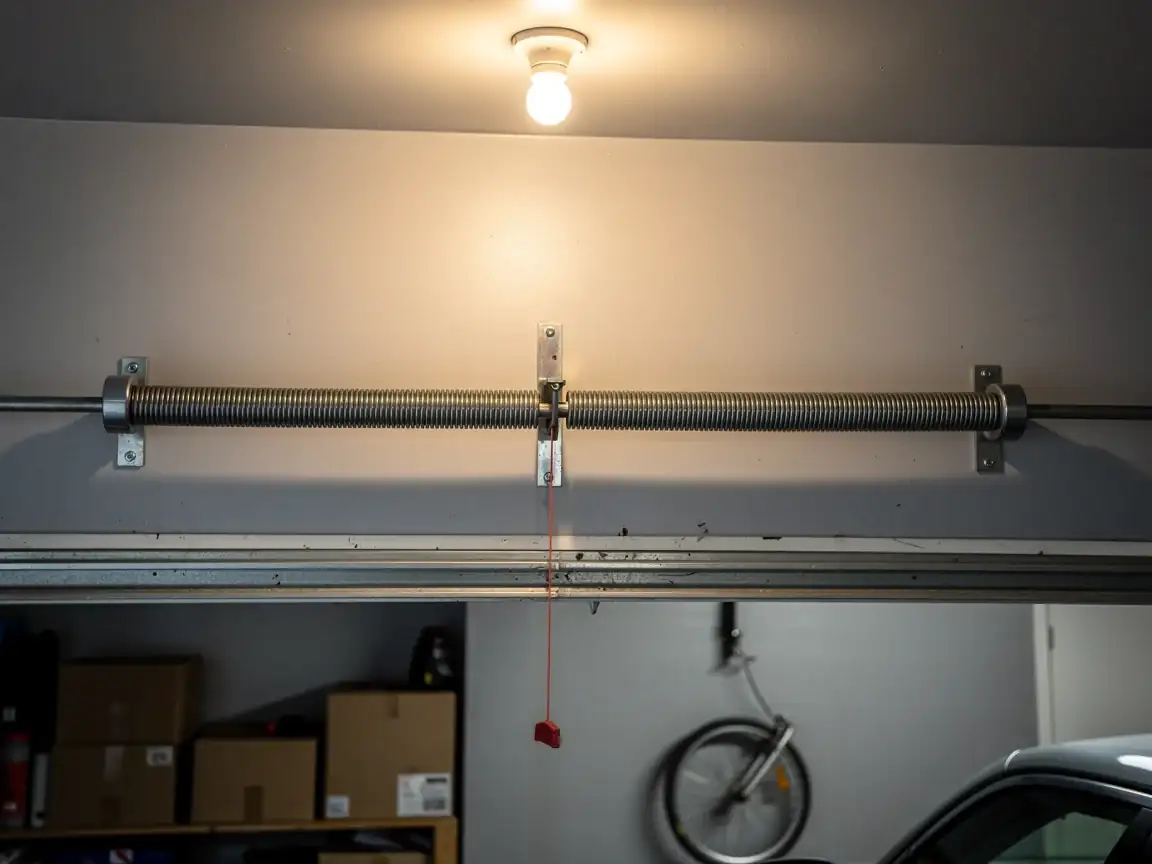
What you should not do is cut or loosen the extension springs, or try to force a door back into alignment while it's under spring tension. Extension springs store a lot of energy, and on a racked door that tension isn't distributed evenly across both sides anymore - that's exactly the setup that causes serious injuries. If the door won't move freely by hand, or if a cable has come loose from a pulley, that's a call for someone who does this for a living, not a weekend project. We'd rather tell you to leave it than have you find out the hard way why we said so.