Why It Happens Here
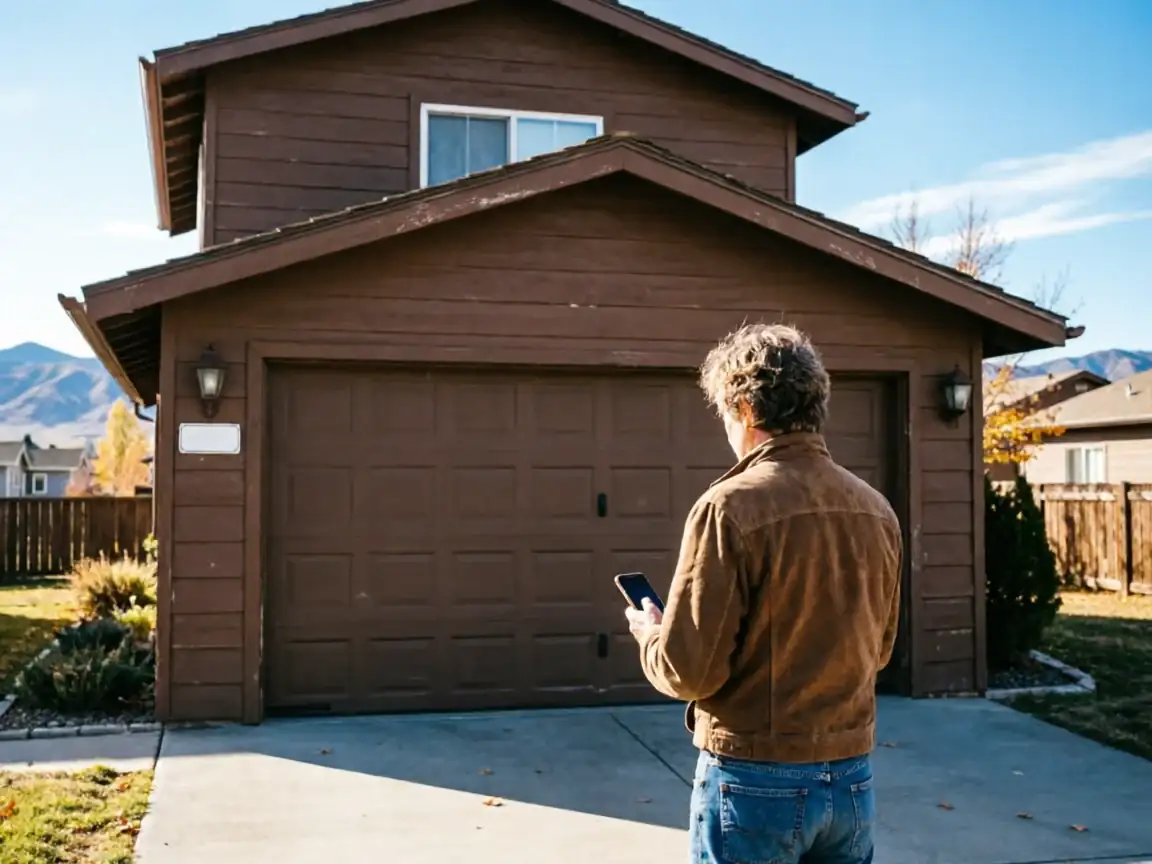
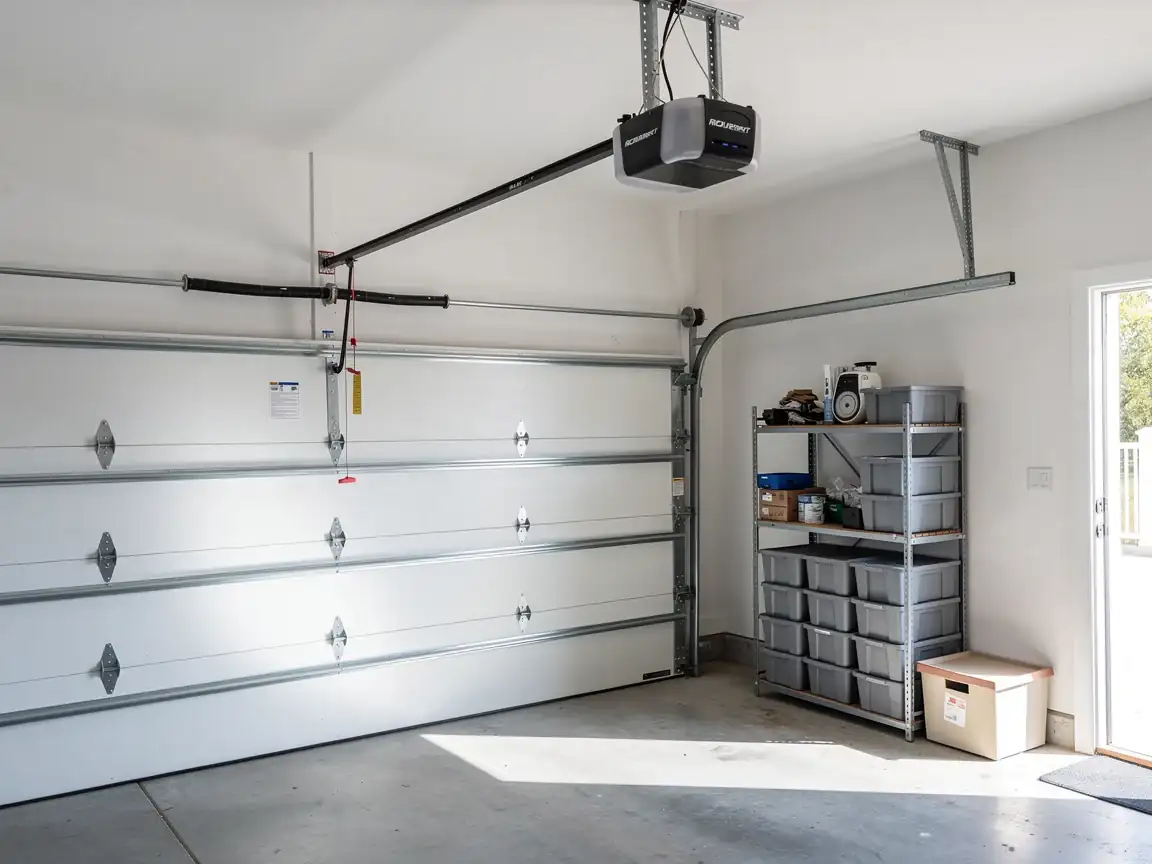
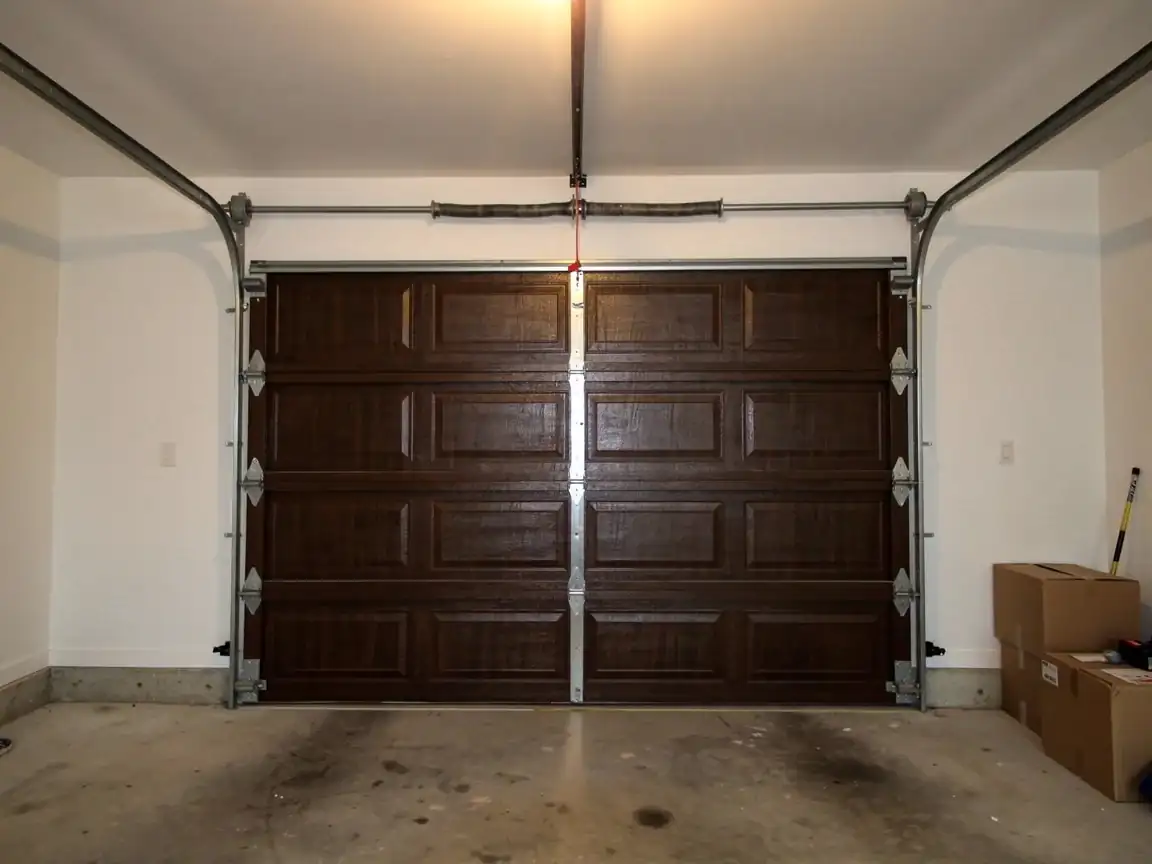
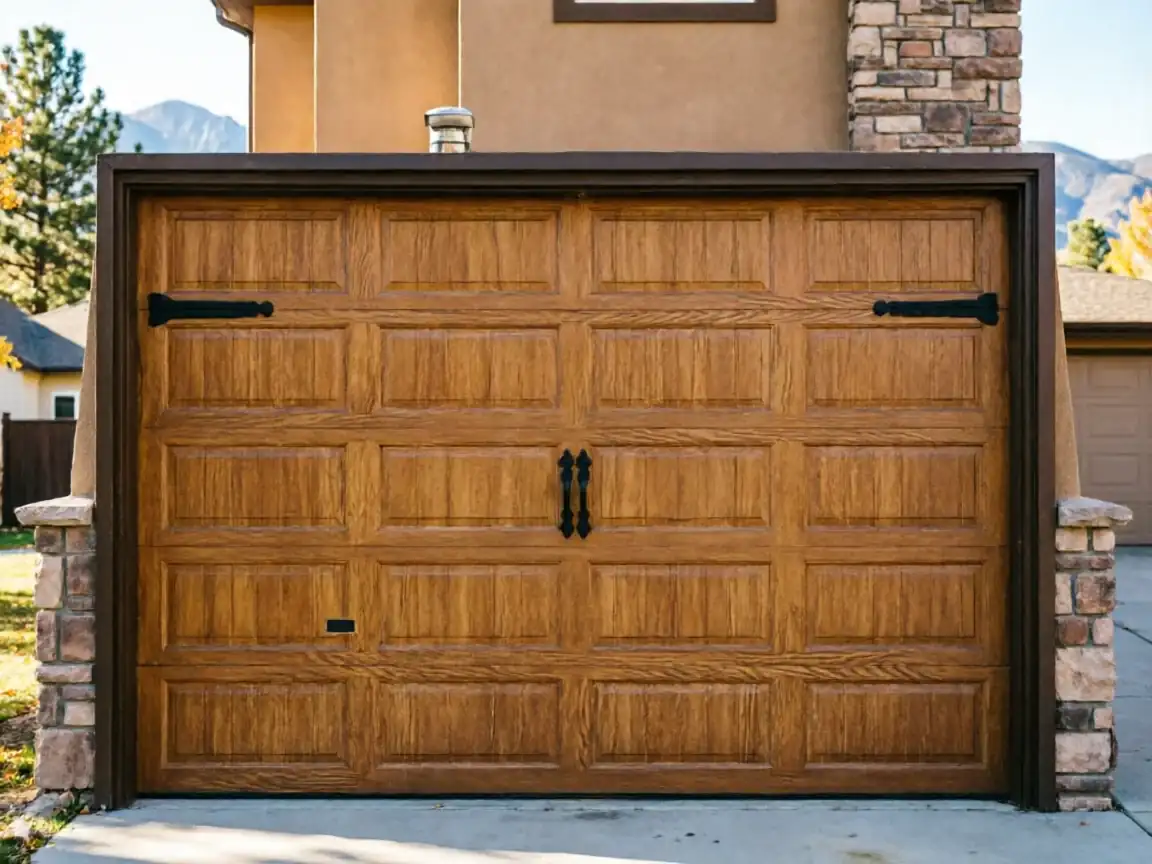
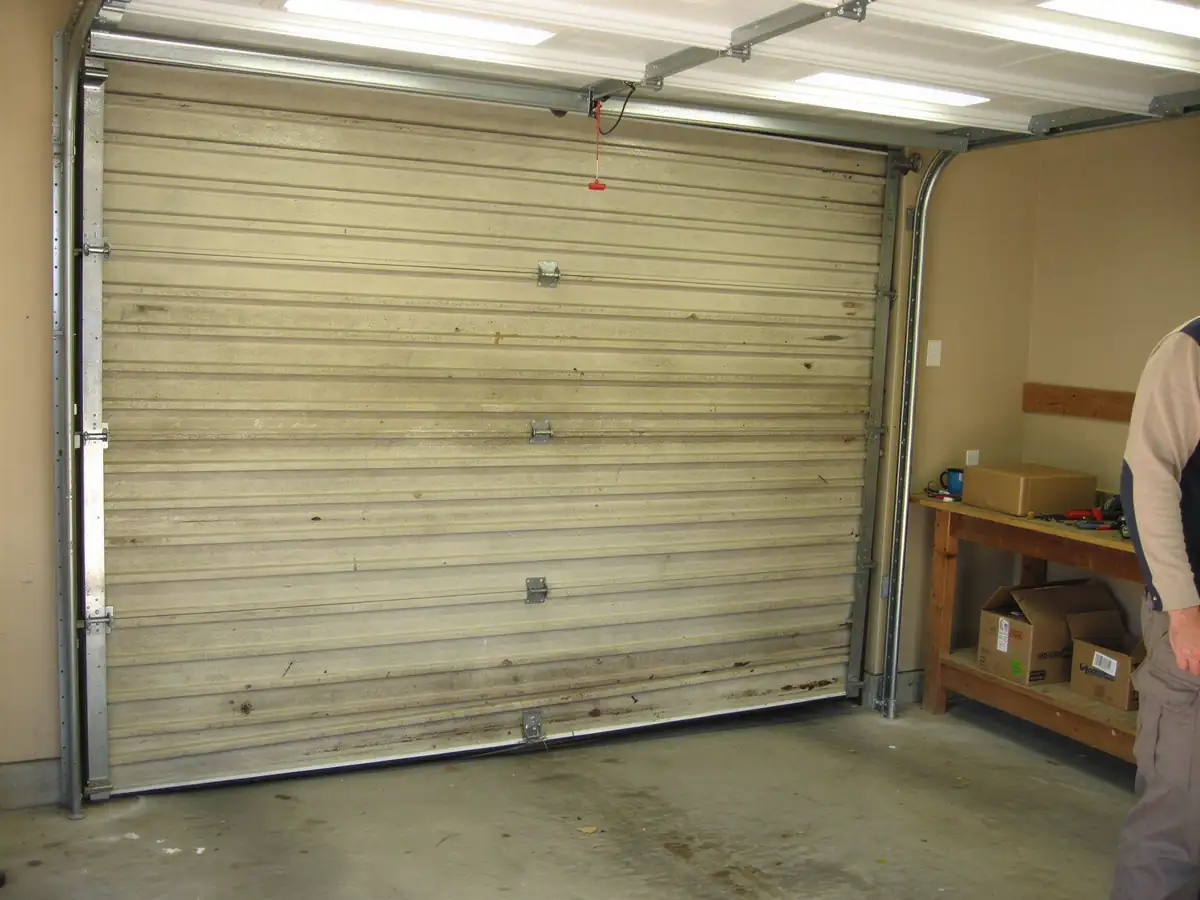
The doors failing out here aren't old in the way an old door usually means old. They're the original door that went up with the house, and most houses in The Pinery were framed out around 1995 - a build year that put a standard, non-insulated steel slab over a chain-drive opener and called it done. That was fine hardware for 1995. Thirty years later the steel has oxidized at the bottom panel, the rollers are the plastic kind nobody specs anymore, and the torsion spring is still the weight-rated size for a door that's heavier now with every layer of weatherstrip added over the years.
Compare that to the service area as a whole, where the median home was built in 1979 - nearly two decades older. That gap matters because it means the failure pattern here isn't the one the rest of the territory sees. You're not dealing with 1970s flush panel doors on obsolete two-inch rolled hardware. You're dealing with a door that's just old enough to have quietly outlived its opener's gear sprocket and its own spring cycle count, without yet looking like it needs anything.
The severe winter band that covers this whole area doesn't help. A 1995 door was never built with the insulation values anyone would spec for a Colorado winter today, so the failure often shows up as a cold garage long before it shows up as a door that won't open.
How Long You Are Without the Door
A straight slab swap on a single door - same opening, same track width, no header repair - is a one-day job once the new door is on site. Double doors with an opener upgrade usually run the same day too, start to finish, but the house has to be ready: opening measured, old door and track clear, driveway accessible for the panel delivery.
We travel from Highlands Ranch to reach The Pinery, about 13 miles out, so this isn't a job we can quote and show up for within the hour. Scheduling the measure visit and the install as two separate trips, rather than trying to compress both into one day, is usually what actually gets your door back on track faster, because it means the right panel width and spring size are already confirmed before a truck leaves with product on it.
The one honest limit here: if your opening is non-standard or the header framing needs work - which shows up more in houses this age than you'd think, since some builders varied rough openings slightly from the plan set - the panel on the truck might not be the panel that fits, and that adds a day. We'd rather tell you that up front than promise a same-day close we can't back.
The Symptom
The clearest sign a 1995-era door in The Pinery is past repair, not just due for a tune-up
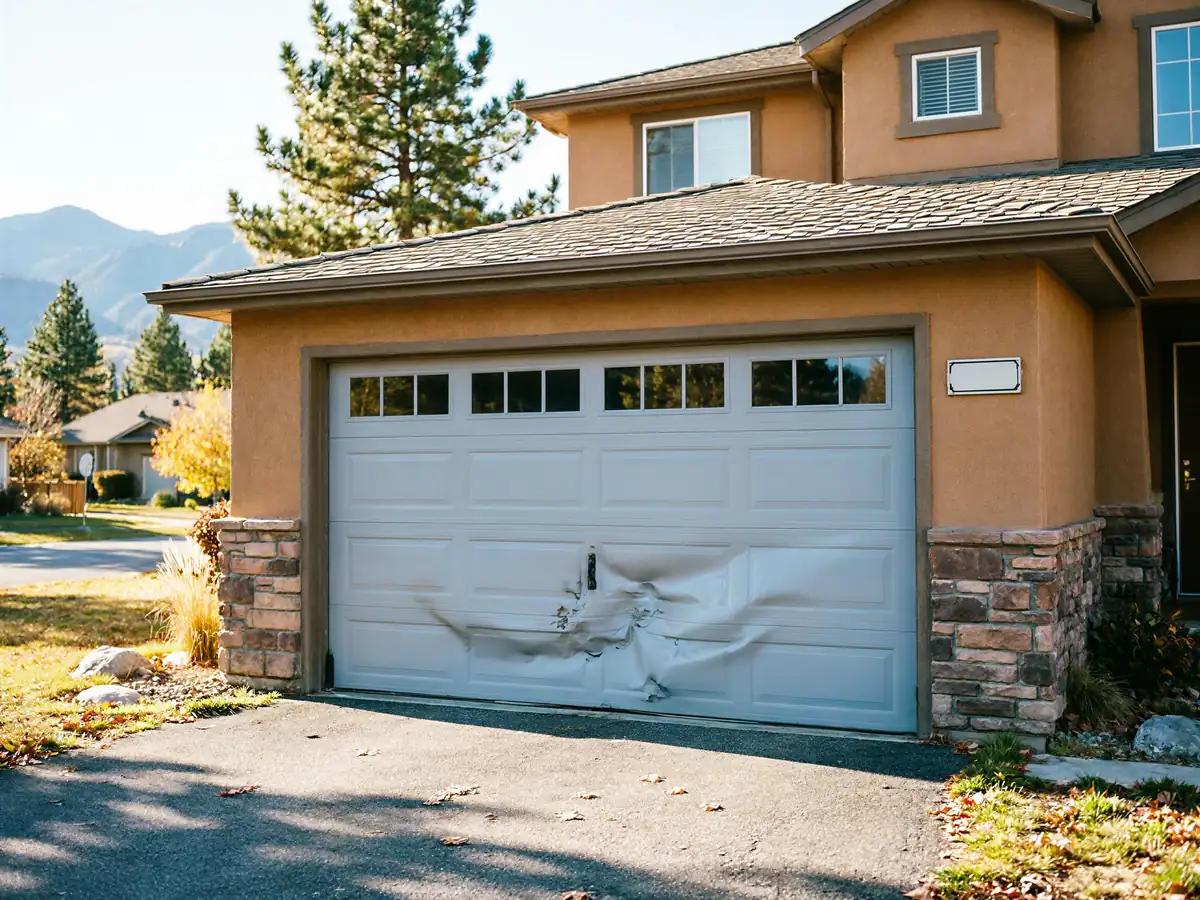
Is delamination at the bottom two panels - the steel skin separating from the foam or cardboard backing underneath, usually starting where snowmelt sits against the bottom seal all winter. Once that's happened on more than one panel, patching doesn't hold.
The second sign is an opener that's started reversing on cold mornings
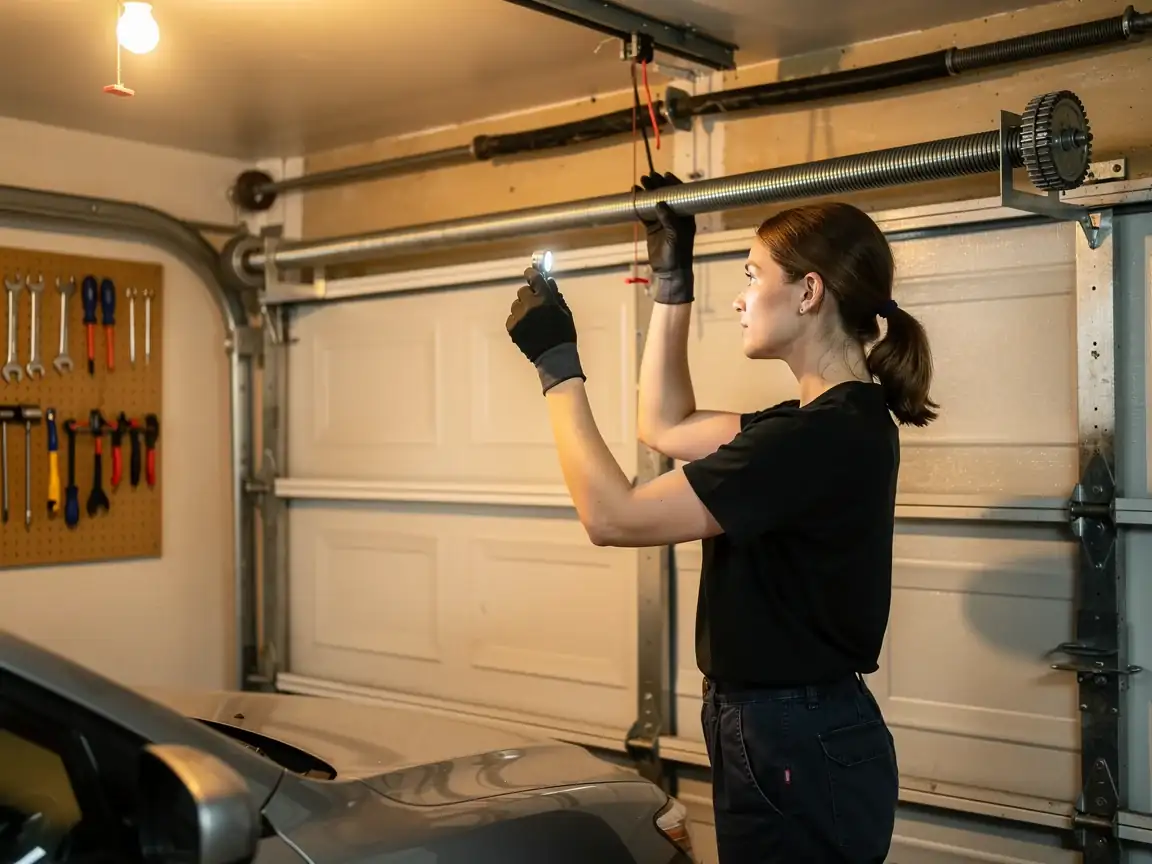
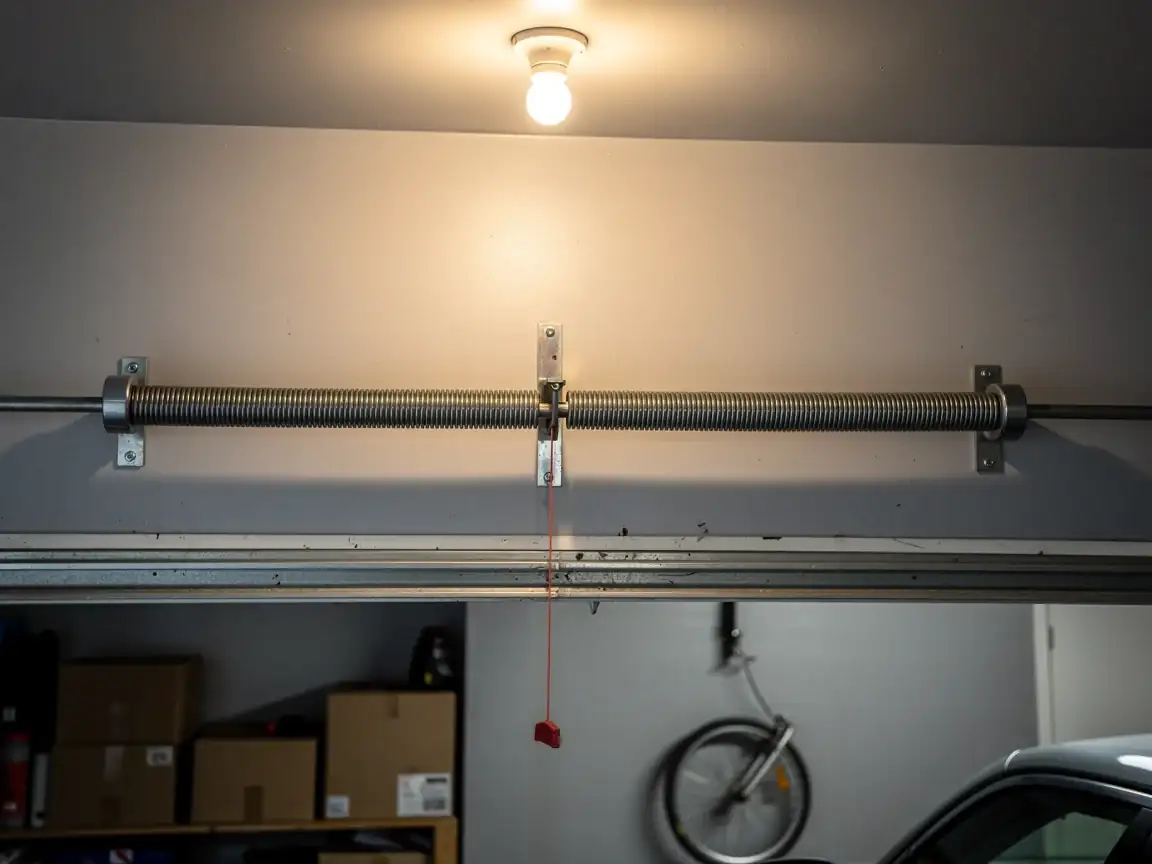
Or straining audibly before it lifts. That's not always the opener's fault. On a lot of these original installs, the spring was sized for the door's original weight, and thirty years of added insulation, a heavier replacement bottom panel, or a second weatherstrip layer can quietly push the door past what that spring was ever rated to lift. The opener takes the blame because it's the part making noise, but the spring is usually the part that's wrong.
If you're only seeing one of these
A little paint flaking, a slightly noisy motor - that's a repair call, not a replacement one. It's when both start showing up together that a new door, not another patch, is the honest answer.
Doing It Yourself
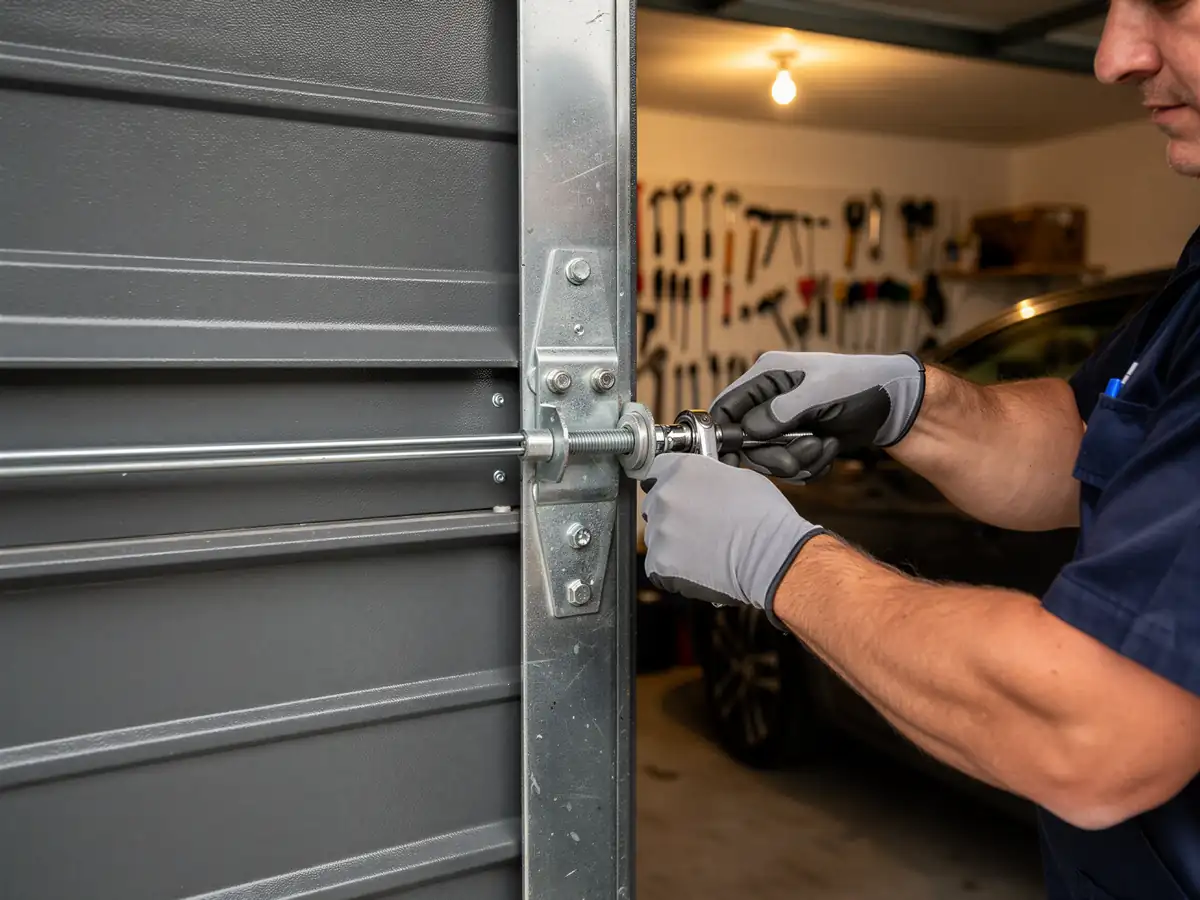
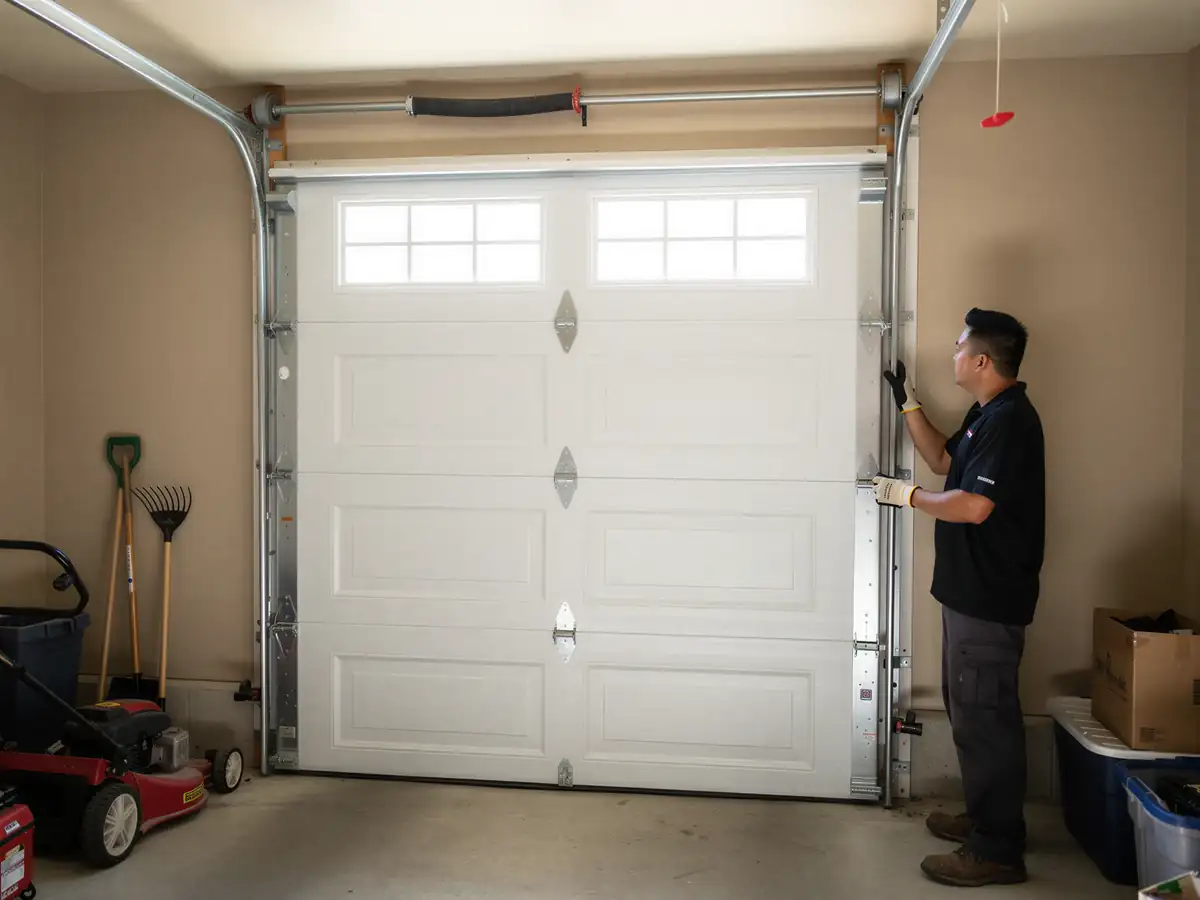
Swapping a garage door slab yourself is not the same job as swapping a storm door, and on a 1995 build in particular, the spring tension in these original systems was set for a lighter door than what most replacement panels weigh today. Releasing or resetting a torsion spring under that kind of mismatch is where people get hurt - not from the door itself, but from the spring letting go while someone's hands are still on the bar.
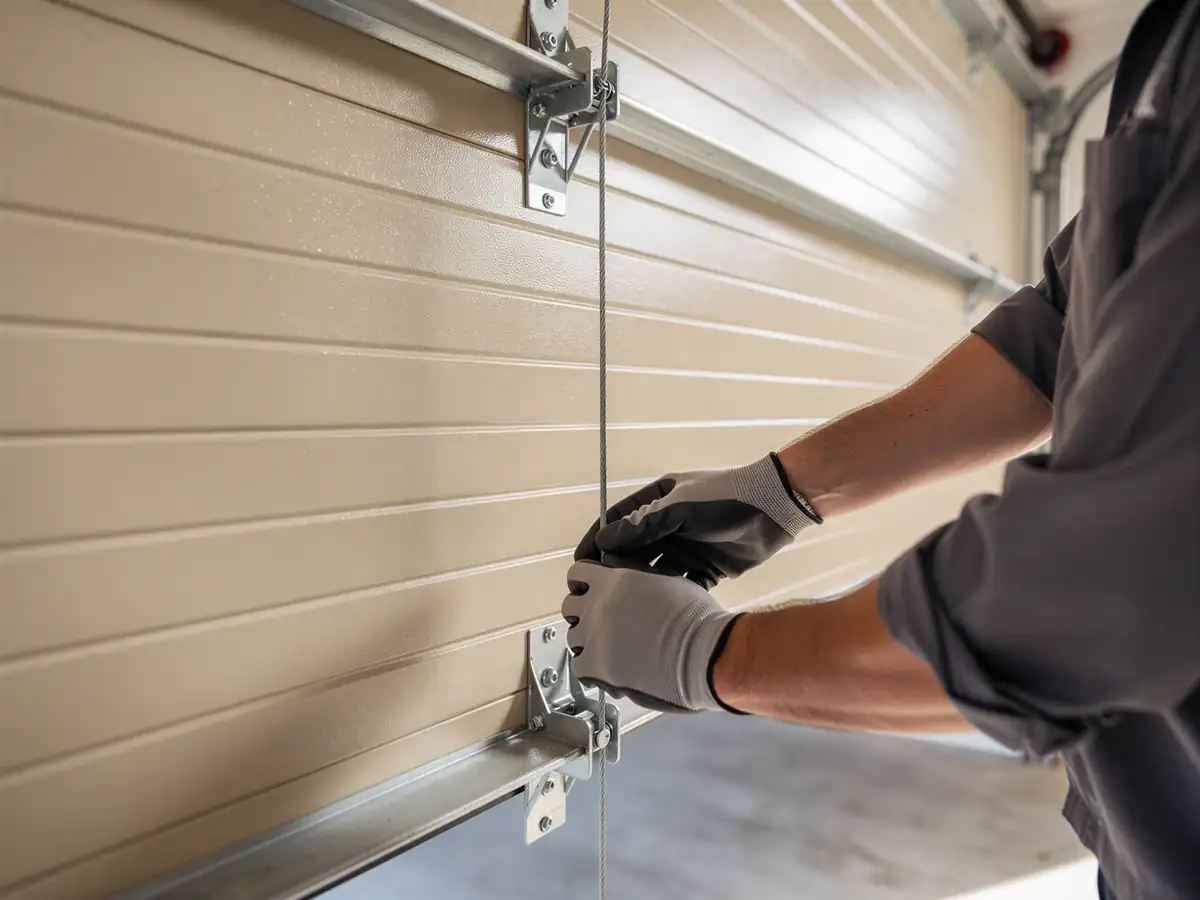
Where a homeowner can reasonably do their own work: swapping worn rollers, replacing weatherstrip, lubricating hinges, or tightening loose track brackets. None of that touches the spring system and none of it requires balancing the door afterward.
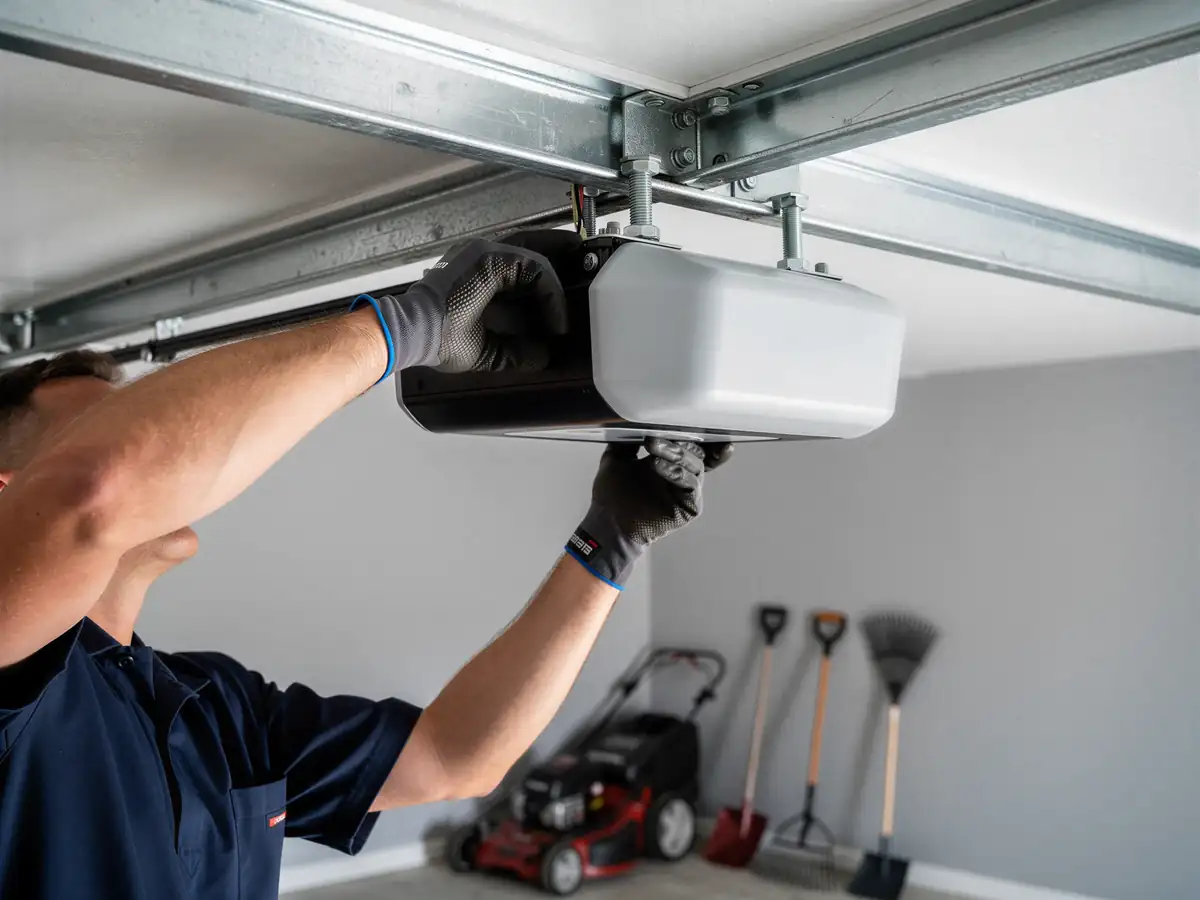
Where we'd tell you not to: full door replacement, any opener swap that changes the lift mechanism, or anything that requires disconnecting and resetting torsion spring tension. If you've already pulled the old door off and you're standing in the opening looking at the spring, that's the point to call rather than the point to keep going. See our The Pinery page for what this covers more broadly, or the Highlands Ranch installation page for how we handle the install itself.